Administration advances critical-mineral funding and commercial-space permitting measures
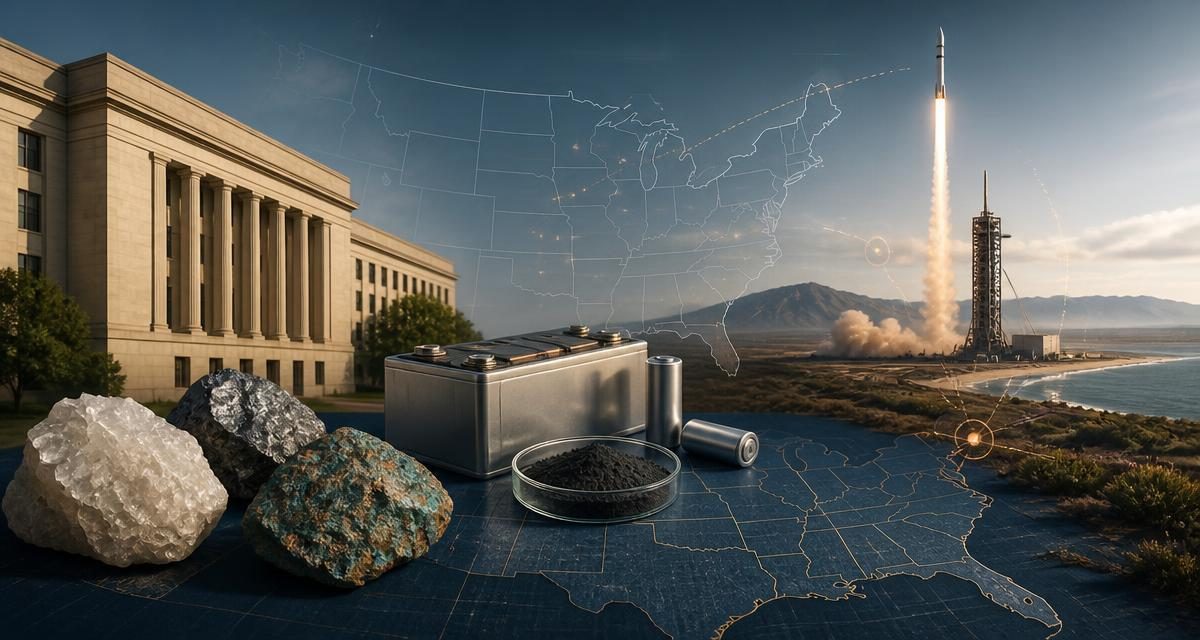
The Department of Energy selected seven domestic lithium, cobalt and battery-material projects for approximately $500 million in grants, according to reporting based on an agency document. President Trump also signed a memorandum directing agencies to examine federal land and regulatory processes for additional commercial launch and re-entry sites. These are funding selections and administrative directives—not completed facilities, operating mines or realized launch capacity.
What changed
DOE moved a previously announced funding opportunity toward project selections, while the White House added a federal-land and permitting initiative for commercial launches.
Why it matters
Both actions target strategic industrial capacity: mineral processing for batteries and defense, and launch infrastructure for military, civil and commercial space competition.
What to watch next
DOE award negotiations and final obligations; project financial close; construction starts; permitting milestones; launch-site environmental review; FAA licensing capacity; measurable domestic mineral output.
What we know
- DOE had previously opened a funding opportunity of up to $500 million for critical-material processing, battery manufacturing and recycling.
- Seven projects were reportedly selected for awards.
- The space memorandum directed agencies to identify federal land and streamline launch or re-entry infrastructure processes.
- Neither action establishes completed physical capacity.
Material unknowns
- Final award amounts and conditions after negotiations.
- Which selected projects will reach construction and commercial production.
- The locations, environmental impacts and deployment schedule for additional launch sites.
U.S. strategic assessment
High interestThese are direct domestic industrial and national-security policies. Their strategic value depends on converting grants, permits and land reviews into cost-competitive operating capacity.
Objectives
- Reduce dependence on foreign mineral processing and battery inputs.
- Support defense, grid, transportation and manufacturing supply chains.
- Increase U.S. commercial launch cadence and infrastructure resilience.
- Use federal land and streamlined permitting to reduce project delays.
Strategy
- Competitive grants with cost-sharing requirements.
- Expedited permitting and federal interagency coordination.
- Use of federal property and existing executive authorities.
- Private-capital leverage rather than wholly federal construction.
Outcomes
- Observed: projects advanced to selection and agencies received new space-infrastructure instructions.
- Not yet observed: completed plants, sustained mineral output, new licensed launch sites or increased launch cadence attributable to these actions.
- Intended outcomes remain multi-year.
Risks
- Cost overruns, commodity-price cycles and foreign price undercutting.
- Local environmental and tribal consultation disputes.
- Grid, water and workforce constraints.
- Announced projects failing to reach final investment decisions.
Sources
01Primary record for the funding opportunity and stated program objective.
Primary program record for eligibility, timetable and award implementation.
Primary source for the commercial-space memorandum and implementation instructions.
Original reporting on the seven mineral selections and space memorandum.
Secondary aggregation identifying both developments; not independent corroboration of Reuters.
Primary institutional source for launch and re-entry licensing constraints and future implementation.