Russian missile drills near disputed islands sharpen confrontation with Japan
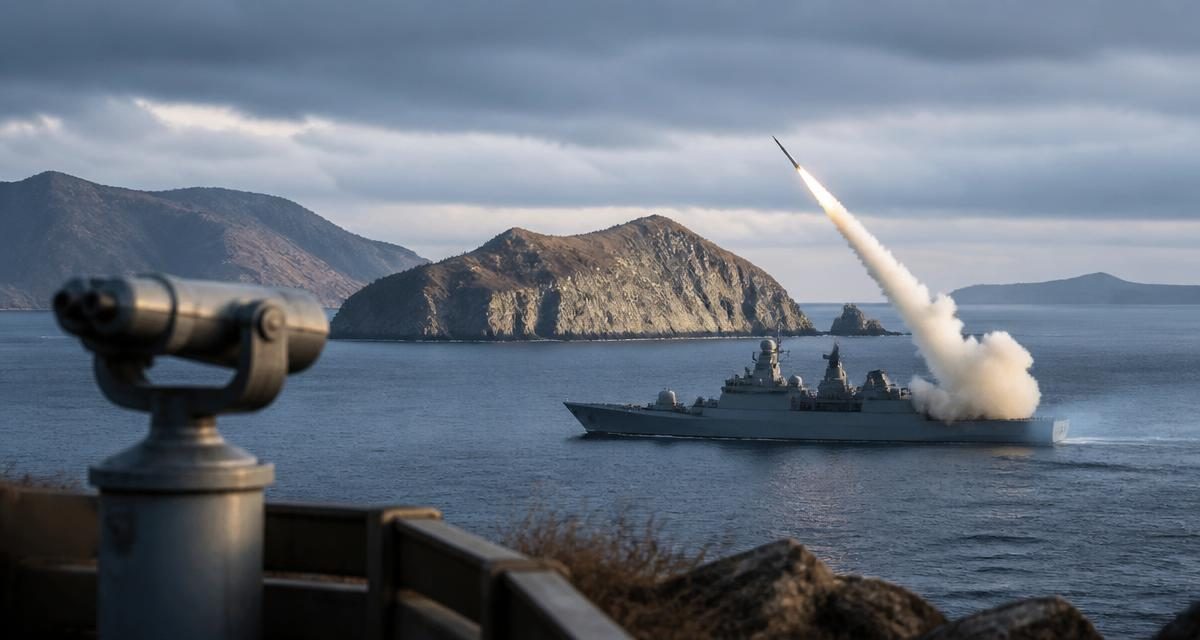
Russia's Pacific Fleet conducted live-fire missile activity near Russian-held islands claimed by Japan shortly after President Vladimir Putin's first official visit to the territory. Tokyo lodged a protest. Russia had notified Japan of exercises, reducing surprise but not the escalation signal.
What changed
The dispute shifted from symbolic diplomacy surrounding Putin's visit to an overt military demonstration involving missile tests and a formal Japanese protest.
Why it matters
The incident links Russia's confrontation with U.S. allies to Northeast Asian territorial disputes near key maritime routes and Japanese defense infrastructure.
What to watch next
Additional Russian deployments, Japanese surveillance or force adjustments, U.S. alliance statements, and reciprocal diplomatic measures.
What we know
- Russia administers the islands and Japan claims four of them.
- Japan protested both Putin's visit and subsequent missile activity.
- The exercises had been notified in advance.
Material unknowns
- Exact missile systems and trajectories
- Whether drills were scheduled before Putin's visit
- Future Russian deployments on the islands
- Any U.S.-Japan treaty interpretation triggered by escalation
U.S. strategic assessment
High interestThe United States has a strong alliance interest in deterring broader coercion against Japan but generally avoids taking a sovereignty position that automatically extends treaty coverage without careful legal assessment. The event also illustrates Russian capacity to pressure U.S. allies outside Europe.
Objectives
- Reassure Japan
- Maintain freedom of navigation and regional deterrence
- Prevent linkage between Russia's European war and coercion in the Pacific
Strategy
- Alliance consultation
- Regional surveillance and deterrence
- Diplomatic support without unnecessary escalation
Outcomes
- Japan protested, but no direct U.S. military response was identified during the window.
- Russian administrative control and Japanese claims remain unchanged.
Risks
- Military accident or miscalculation
- Greater Russian-Chinese coordination around Japan
- Japanese force diversion from other regional contingencies
- Further collapse of peace-treaty diplomacy
Sources
01Official Japanese territorial position and diplomatic record
Japanese original reporting citing government and Russian Pacific Fleet statements
International report consolidating Japanese and Russian accounts
European cross-check using AFP and Kyodo reporting
Official Russian government record and territorial framing