Congo's Bundibugyo Ebola outbreak accelerates as unproven cross-protection strategy begins
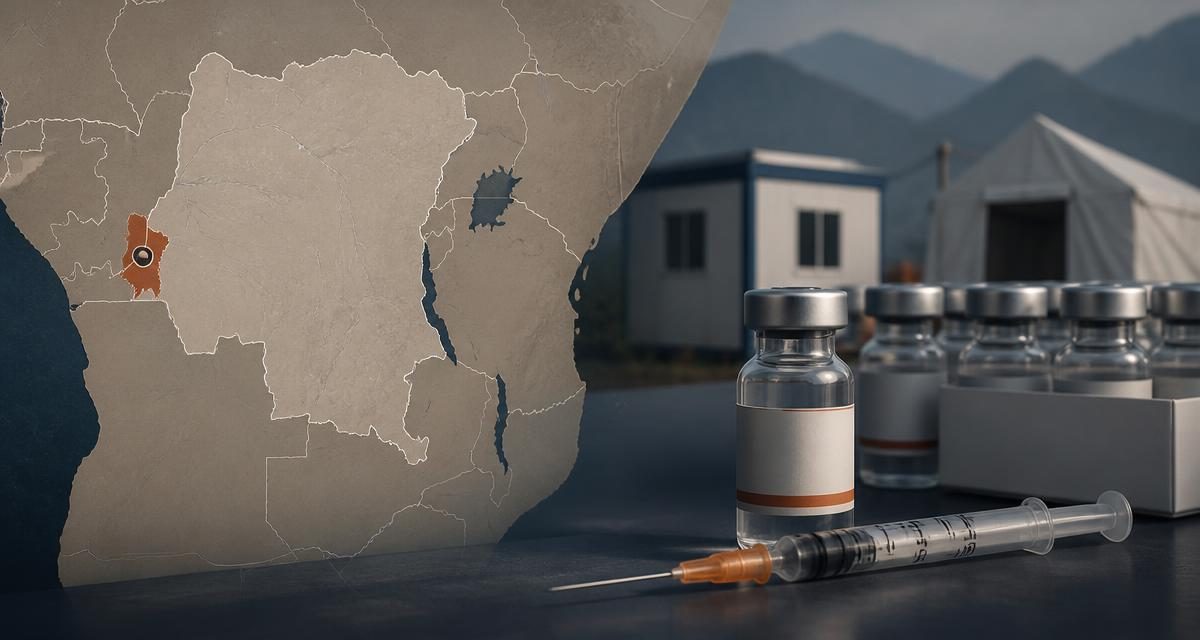
The Democratic Republic of the Congo's Bundibugyo Ebola outbreak exceeded 5,000 confirmed cases and roughly 2,400 deaths, with officials warning the true total may be far higher. Seventy thousand Ervebo doses were allocated even though that vaccine is licensed for Zaire ebolavirus, not the Bundibugyo virus driving this outbreak; protection therefore remains unproven and part of the allocation is for clinical evaluation.
What changed
New analysis indicated that the outbreak had not peaked and could be approximately three times the detected size. Officials proceeded with a 70,000-dose Ervebo allocation while explicitly acknowledging that effectiveness against Bundibugyo virus is not established.
Why it matters
The outbreak has high mortality, is spreading through conflict-affected areas, lacks a proven species-specific vaccine, and could become a global health-security emergency if regional containment fails.
What to watch next
Updated case and mortality denominators, trial protocols and results, adverse-event surveillance, geographic expansion, health-worker infections, and any extension or revision of CDC's temporary order.
What we know
- The outbreak is caused by Bundibugyo virus.
- No vaccine or virus-specific treatment was licensed for this species during the coverage window.
- Ervebo's demonstrated benefits against Zaire ebolavirus cannot be assumed for Bundibugyo virus.
- Reported deaths are confirmed surveillance counts, not estimates of all deaths.
Material unknowns
- True infections and deaths outside surveillance
- Ervebo effectiveness and safety against Bundibugyo by population
- Timing and height of the epidemic peak
- Durability of international financing and access
U.S. strategic assessment
Critical interestThis is the most consequential current HHS-related development because CDC has invoked border-health authority while supporting an international response to an exceptionally fast outbreak. The U.S. must balance domestic risk reduction, evidence-generating vaccine use, humanitarian access, and avoidance of measures that drive cases underground.
Objectives
- Prevent introduction and sustained transmission in the United States
- Support containment at the source
- Accelerate validated diagnostics, vaccines, and therapeutics
- Protect U.S. citizens and health workers without overstating evidence
Strategy
- CDC port-health measures and traveler risk management
- Technical and laboratory support
- International outbreak assistance
- Clinical evaluation of candidate or potentially cross-protective vaccines
Outcomes
- CDC issued a temporary entry-related public-health order on August 11, effective August 12.
- No sustained U.S. transmission was reported in the reviewed record.
- The outbreak continued to outpace response capacity despite international assistance.
Risks
- Regional spread into fragile or conflict-affected states
- Health-worker infection and collapse of routine care
- Public confusion that vaccine allocation equals demonstrated effectiveness
- Border policies that impede reporting or essential personnel movement
Sources
01Rapid risk assessment, case data, intervention status, and uncertainty
Independent public-health threat assessment and surveillance cross-check
Operative U.S. public-health border order and risk rationale
Original reporting and data analysis on outbreak trajectory
Country-region reporting on delayed detection, testing limitations, and Uganda comparison
Reporting from Congo on local response capacity and health-worker conditions
Regional situation reports and response operations