Hormuz tanker incidents continue as U.S. blockade enforcement intensifies
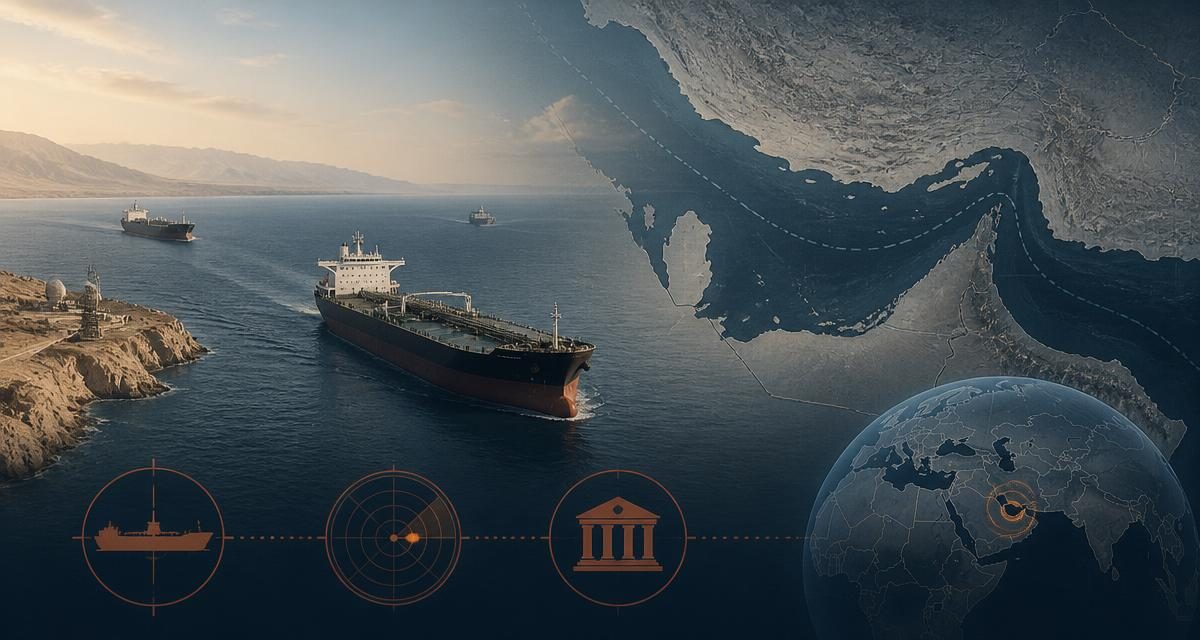
New tanker incidents on October 10–11 extend the shipping risks around Hormuz. UKMTO’s dated notices describe outbound tankers struck by unidentified projectiles, including an October 10 fire and October 11 damage; crews were reported safe. Separately, CENTCOM said it disabled a cargo vessel in the Gulf of Oman on October 10 after the ship ignored blockade warnings. These accounts document continuing danger and U.S. enforcement claims, not a verified complete closure of the strait.
Article updated Oct 11, 2026, 1:36 PM Pacific
Alternative routes: dated use and constraints
The October 6 baseline remains: Reuters estimated September oil flows from seven Gulf producers excluding Iran at 19.2 million barrels per day, 81% of the 23.6 million-bpd prewar baseline. Saudi Arabia's energy minister said East-West Pipeline throughput reached 5.8 million barrels on October 6, while Reuters reported about 4 million bpd was being rerouted to Yanbu. Reuters also described Omani-side channels and open-water transfers with U.S. aerial support. These figures cover different periods and routes; stated capacity, observed use and sustained throughput are not interchangeable.
Iran/IRGC rhetoric
Iranian statements threatening unauthorized routes and claiming control of the strait remain attributed positions. They do not identify the cause of every incident or establish complete closure. A reported mine claim must not be substituted for UKMTO’s unidentified-projectile assessment without evidence linking the same vessel and event.
Verified U.S. assessment
CENTCOM’s October 10 statement, reproduced by Forth and independently reported by Reuters, says a U.S. jet disabled the Panama-flagged M/V Ocean Molica, also known as Arika Sun, without injuring the crew. Reuters said it could not immediately reach the operator. This establishes the military’s account; it is not independent verification of every operational detail.
Sanctions and financial pressure
Treasury’s October 8 shipping designations add a legal track to the military pressure. The action names vessels and support companies. Treasury’s broader claims about fleet neutralization should remain attributed rather than treated as measured shipping outcomes.
Commercial flows and costs
The October 6 flow and pipeline measurements above are historical baselines, not a fresh October 11 throughput count. Tracking data can miss vessels operating with transmitters off. Risk to crews, delays and route uncertainty can affect freight and insurance even when some traffic continues.
Civilian safety and evidence limits
UKMTO’s October 11 notice reports safe crew and no reported environmental impact at the time of that attack. The October 10 fire notice leaves damage and environmental effects unresolved. These are separate dated reports and should not be collapsed into one casualty or pollution claim.
Assessment
Inference: the combination of reported attacks, U.S. blockade enforcement and legal sanctions keeps shipping risk elevated. Neither isolated transits nor low visible traffic proves normal service or complete closure. The reviewed record does not supply paired White House and CENTCOM confirmation of total closure.
What comes next
Track identifiable incident updates, crew and environmental outcomes, independently observed shipping volumes, bypass-route use and current U.S. operational statements. Preserve each report’s date and separate maritime warning, military claim and measured commercial effect.
What changed
UKMTO records additional October 10–11 incidents, while CENTCOM reports an October 10 vessel-disabling action.
Why it matters
Crew safety, commercial transit and military enforcement remain distinct but connected risks to regional shipping.
What to watch next
Incident identities and follow-ups, crew and environmental outcomes, independently observed transit, route volumes and authoritative operational statements.
What we know
- UKMTO notices report separate outbound-tanker incidents on October 10 and11, with crews reported safe.
- CENTCOM said it disabled a cargo vessel in the Gulf of Oman after blockade warnings.
- Treasury issued October 8 shipping designations.
Material unknowns
- Projectile attribution, complete damage assessments, current total throughput and independent verification of all military details remain unresolved.
U.S. strategic assessment
Critical interestInference: attacks and blockade enforcement preserve severe commercial and civilian-safety risks; complete closure is not established.
Objectives
- Protect crews, lawful transit and regional energy supply while assessing military and sanctions actions accurately.
Strategy
- Separate official claims, incident reports and independently measured shipping outcomes.
Outcomes
- Additional maritime incidents and a U.S. enforcement account are documented.
Risks
- Further attacks, attribution errors, environmental harm and confusing partial tracking with total flow.
Sources
01Official indexed notices164 and162; live dynamic page did not expose incident cards.
Corroborates reported damage, safe crew and investigation.
Attributed institutional statement reproduced by distribution service.
Independent reporting of military statement and unavailable operator response.
Legal measures and attributed impact assessment.
Independent reporting cross-check; government and company claims remain attributed.
Independent reporting cross-check; government and company claims remain attributed.
Independent reporting cross-check; government and company claims remain attributed.
Dated primary record; measurement, legal status and implementation are separated from claims and outcomes.
Independent reporting cross-check; government and company claims remain attributed.
Independent reporting cross-check; government and company claims remain attributed.
Dated primary record; measurement, legal status and implementation are separated from claims and outcomes.