DRC Ebola: CDC reports 8,688 confirmed cases as Kenya expands contact tracing
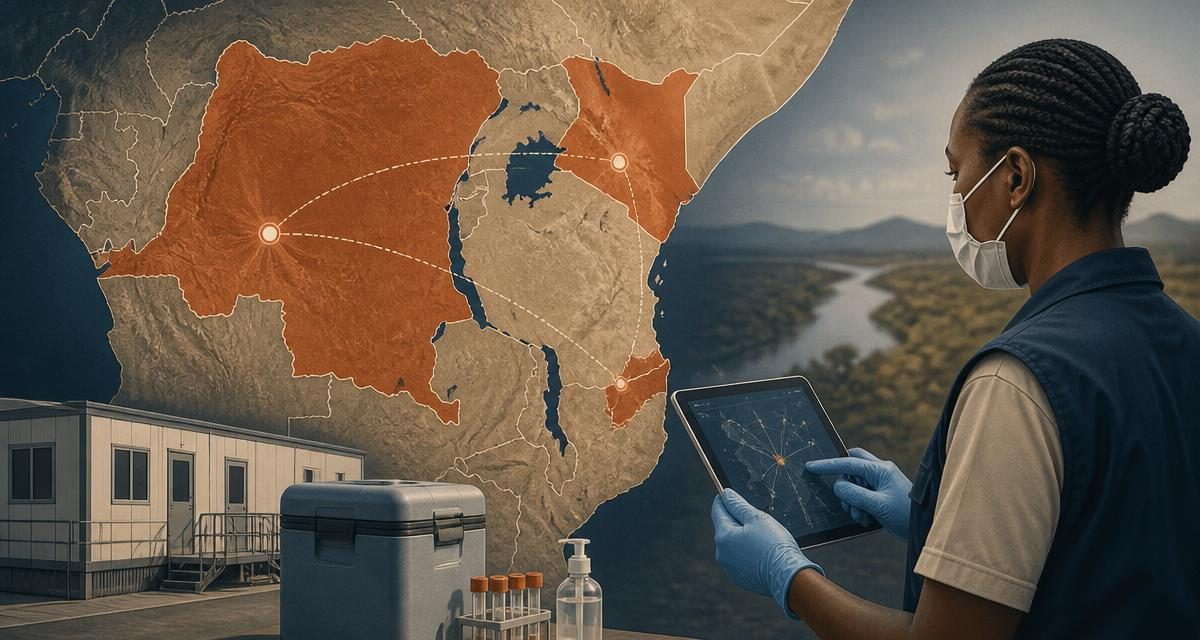
CDC's October 7 update reported 8,688 confirmed cases and 4,181 confirmed deaths across the current Bundibugyo-virus Ebola outbreak, including 8,665 cases and 4,178 deaths in the Democratic Republic of Congo as of October 5, 20 confirmed cases and two confirmed deaths in Uganda plus one probable case and death, one case and death in Kenya, and one nonfatal case in France. CDC described this as the second-largest Ebola outbreak on record and assessed the risk to the U.S. general public as very low.
Kenya contact tracing
Kenya's health minister said October 7 that the contact list had risen to 57 and 10 people were quarantined. Officials were also tracing aircraft cleaners and later passengers. Contact identification and quarantine are response actions; they do not establish secondary infection.
Containment constraints
Africa CDC's director-general told AP that more than 70% of new cases were outside known contact chains and at least 60% of deaths occurred outside treatment centers. North Kivu accounted for about 40% of newly confirmed DRC cases in that reporting. These attributed operational indicators point to surveillance and treatment gaps but remain tied to Africa CDC's stated cutoff and definitions.
U.S. response and risk
CDC reported more than 500 staff supporting the response, including over 120 deployed, and maintained its assessment that risk to the U.S. general public is very low. Entry measures and traveler monitoring reduce risk; they do not change the severity of the outbreak in affected countries.
Evidence limits and assessment
CDC says counts are rapidly evolving and subject to reconciliation; suspected DRC cases and deaths were temporarily excluded during data standardization. One imported Kenyan case does not establish sustained transmission there. AP reported 57 contacts identified in Kenya with 10 quarantined and, separately, Africa CDC's statement that more than 70% of new DRC cases were outside known contacts and at least 60% of deaths occurred outside treatment centers; those operational percentages use Africa CDC's reporting context and are not U.S. CDC totals. Inference: the scale, new hot spots and high share of cases outside known contact chains indicate a major containment challenge, while Kenya's expanding contact list shows the practical consequence of cross-border travel. The very-low U.S. public risk reflects current exposure pathways and controls, not absence of a severe regional emergency.
What to watch next
Secondary cases in Kenya; completion of 21-day monitoring; DRC cases outside known contacts; deaths outside treatment centers; treatment-bed access; responder security; vaccination and laboratory capacity; and CDC, WHO and Africa CDC reconciliation.
Why it matters
Inference: the scale, new hot spots and high share of cases outside known contact chains indicate a major containment challenge, while Kenya's expanding contact list shows the practical consequence of cross-border travel. The very-low U.S. public risk reflects current exposure pathways and controls, not absence of a severe regional emergency.
What to watch next
Secondary cases, completed contact monitoring, new DRC hot spots, treatment access, responder security and reconciled CDC, WHO and Africa CDC totals.
Material unknowns
- CDC says counts are rapidly evolving and subject to reconciliation; suspected DRC cases and deaths were temporarily excluded during data standardization. One imported Kenyan case does not establish sustained transmission there. AP reported 57 contacts identified in Kenya with 10 quarantined and, separately, Africa CDC's statement that more than 70% of new DRC cases were outside known contacts and at least 60% of deaths occurred outside treatment centers; those operational percentages use Africa CDC's reporting context and are not U.S. CDC totals.
U.S. strategic assessment
High interestInference: the scale, new hot spots and high share of cases outside known contact chains indicate a major containment challenge, while Kenya's expanding contact list shows the practical consequence of cross-border travel. The very-low U.S. public risk reflects current exposure pathways and controls, not absence of a severe regional emergency.
Objectives
- Protect U.S. security, economic resilience, and citizens using measurable, lawful action.
Strategy
- Use primary records, allied coordination, market evidence, and independent verification to distinguish action from rhetoric.
Risks
- CDC says counts are rapidly evolving and subject to reconciliation; suspected DRC cases and deaths were temporarily excluded during data standardization. One imported Kenyan case does not establish sustained transmission there. AP reported 57 contacts identified in Kenya with 10 quarantined and, separately, Africa CDC's statement that more than 70% of new DRC cases were outside known contacts and at least 60% of deaths occurred outside treatment centers; those operational percentages use Africa CDC's reporting context and are not U.S. CDC totals.
Sources
01Dated primary record; measurement, legal status and implementation are separated from claims and outcomes.
Independent reporting cross-check; government and company claims remain attributed.
Independent reporting cross-check; government and company claims remain attributed.
Independent reporting cross-check; government and company claims remain attributed.
Independent reporting cross-check; official claims and estimates remain attributed.
Dated primary record; action or measurement is separated from implementation, outcome and inference.
Dated primary record; the action or measurement is separated from later implementation and inference.
Original official record; publication date and measured result are separated from inference.
Original official record; publication date and measured result are separated from inference.
Original official record; actions, dates and measured results are kept separate.
Original official record; actions, dates and measured results are kept separate.
Original official record; actions, dates and measured results are kept separate.
Original official record; distinguishes actions from claimed outcomes.
Official regional public-health assessment.
Current assessment and infection-control gaps.
Case context and provincial divergence.