DRC Ebola: Kenya confirms first imported case and death, expanding cross-border response
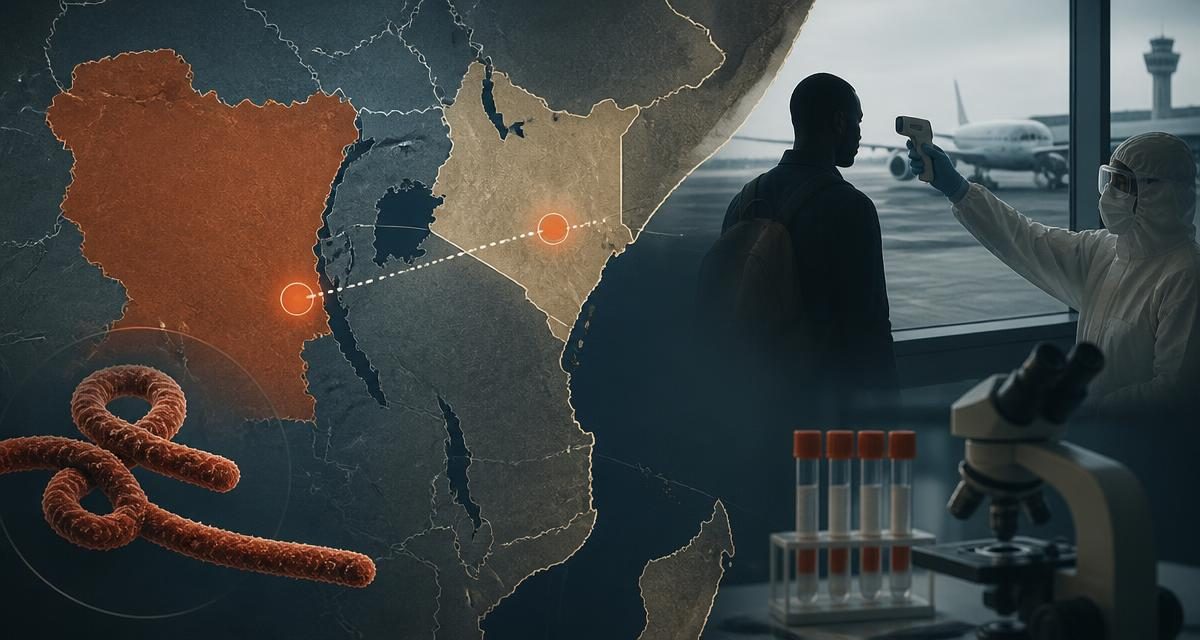
Kenya confirmed its first Ebola case on October 6 after a Kenyan citizen who had lived in the Democratic Republic of Congo traveled by road through Uganda and flew to Nairobi, where he died October 5. Kenyan authorities identified 28 local contacts and were tracing 23 passengers and four crew members from his flight. This is the third country to report a case linked to the eastern DRC outbreak; Uganda was declared Ebola-free in August.
Response
Kenya's health minister said nearly 5,000 health workers had been trained on Ebola prevention and management. Authorities isolated the patient after hospital admission and initiated contact tracing and safe-burial procedures.
Evidence limits
One imported case does not establish sustained community transmission in Kenya. Screening did not detect the traveler, and officials said medication may have masked symptoms. Contact identification is not the same as completed follow-up, and case and death totals remain subject to reconciliation across national, WHO and Africa CDC reporting cutoffs.
Assessment / inference
Inference: confirmed air travel after overland transit expands cross-border response demands and exposes a screening limitation, but rapid isolation and contact tracing may contain the event. The immediate test is whether all flight and local contacts are found, monitored and tested and whether secondary cases appear.
What to watch next
Completion of passenger, crew, household and health-worker follow-up; secondary cases; genomic linkage; reconciled DRC totals; border screening changes; treatment capacity; worker protection and medical-countermeasure evidence.
What to watch next
Contact tracing, secondary cases, genomic linkage, reconciled DRC totals, border screening, treatment capacity and worker protection.
U.S. strategic assessment
High interestInference: confirmed air travel after overland transit expands cross-border response demands and exposes a screening limitation, but rapid isolation and contact tracing may contain the event. The immediate test is whether all flight and local contacts are found, monitored and tested and whether secondary cases appear.
Objectives
- Protect U.S. security, economic resilience, and citizens using measurable, lawful action.
Strategy
- Use primary records, allied coordination, market evidence, and independent verification to distinguish action from rhetoric.
Risks
- One imported case does not establish sustained community transmission in Kenya. Screening did not detect the traveler, and officials said medication may have masked symptoms. Contact identification is not the same as completed follow-up, and case and death totals remain subject to reconciliation across national, WHO and Africa CDC reporting cutoffs.
Sources
01Independent reporting cross-check; government and company claims remain attributed.
Independent reporting cross-check; official claims and estimates remain attributed.
Dated primary record; action or measurement is separated from implementation, outcome and inference.
Dated primary record; the action or measurement is separated from later implementation and inference.
Original official record; publication date and measured result are separated from inference.
Original official record; publication date and measured result are separated from inference.
Original official record; actions, dates and measured results are kept separate.
Original official record; actions, dates and measured results are kept separate.
Original official record; actions, dates and measured results are kept separate.
Original official record; actions, dates and measured results are kept separate.
Original official record; distinguishes actions from claimed outcomes.
Official regional public-health assessment.
Current assessment and infection-control gaps.
Case context and provincial divergence.