United StatesUnited StatesOctober 1 evidence assessment
U.S. Congress: Senate rejects cloture on the data-center grid-cost bill
Preparing article image…
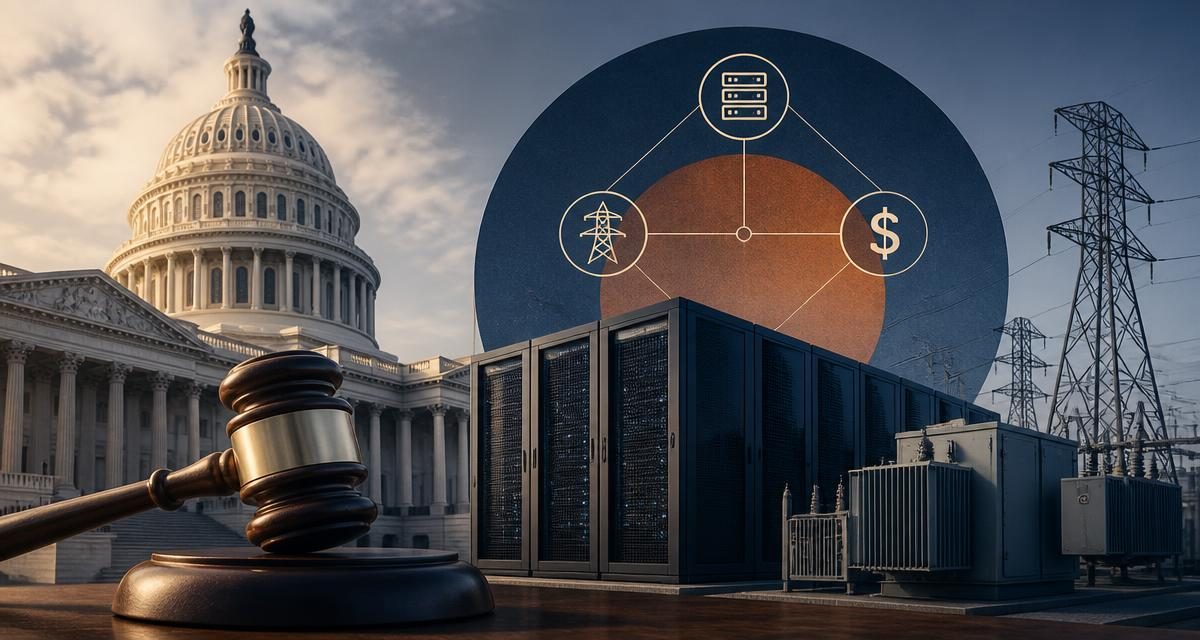
The Senate rejected cloture on the motion to proceed to H.R. 9340 by 57–43 on September 30, three votes short of the required three-fifths threshold. The House-passed bill would require state regulators to consider a federal standard for recovering the full incremental grid-upgrade costs serving large-load customers. The vote was procedural, not final passage or rejection of the bill's merits.
90% ConfidenceHigh confidence in dated official records and directly observed events; market interpretation, military effectiveness and future implementation remain uncertain.
Evidence, status and limits
Supporters say the bill would protect ordinary ratepayers; opponents say its state-consideration mechanism is not mandatory and could displace stronger approaches. Those are policy claims. The text does not itself prove lower household rates, data-center delays or a specific federal budget effect. The failed cloture vote is a lawful exercise of Senate procedure and reflects mostly partisan opposition plus bipartisan disagreement; it is not evidence of unlawful obstruction.
Why it matters / inference
Inference: the failed vote leaves state-by-state cost allocation and utility proceedings as the immediate operational venue. It increases near-term implementation uncertainty for household electricity exposure and large-load infrastructure planning.
What to watch next
Any renewed motion or successor text; state commission orders; utility interconnection costs; enforceable cost-allocation rules; measured household rate effects.
What changed
October 5 review found no independently verified post-cutoff evidence that changed this standing conclusion. Earlier measurements retain their original observation dates.
U.S. strategic assessment
High interest
Inference: the failed vote leaves state-by-state cost allocation and utility proceedings as the immediate operational venue. It increases near-term implementation uncertainty for household electricity exposure and large-load infrastructure planning.
Objectives
Protect U.S. security, economic resilience, and citizens using measurable, lawful action.
Strategy
Use primary records, allied coordination, market evidence, and independent verification to distinguish action from rhetoric.
Risks
Supporters say the bill would protect ordinary ratepayers; opponents say its state-consideration mechanism is not mandatory and could displace stronger approaches. Those are policy claims. The text does not itself prove lower household rates, data-center delays or a specific federal budget effect. The failed cloture vote is a lawful exercise of Senate procedure and reflects mostly partisan opposition plus bipartisan disagreement; it is not evidence of unlawful obstruction.