Iran/IRGC Rhetoric: cargoes probe dark routes as Saudi barrels shift toward Oman
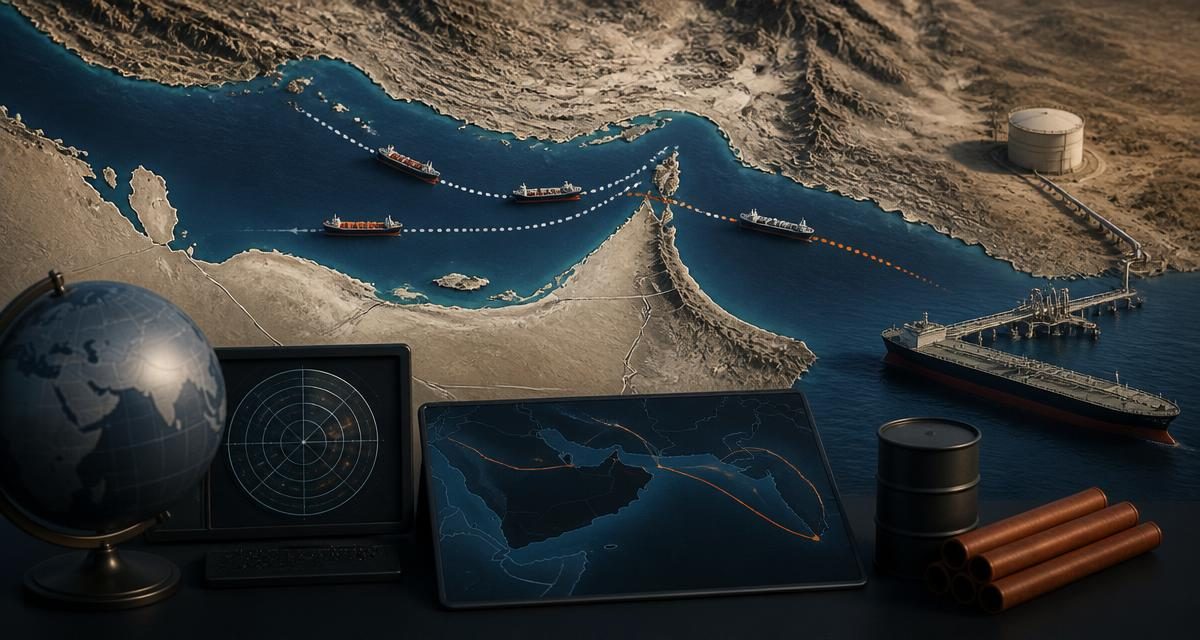
Four commodity vessels were AIS-visible through Hormuz on September 15—two entering and two leaving, with no visible very-large crude carrier or LNG carrier—versus an 18-vessel daily wartime average. The count excludes military-escorted and other transponder-dark vessels and therefore cannot establish closure. Two documented cargoes totaling about 980,000 barrels used Iranian waters or reduced tracking, while Saudi Arabia began offering additional crude cargoes through Oman because its East–West pipeline and Yanbu loading route remain impaired. No joint White House-and-CENTCOM confirmation establishes complete closure.
Central finding
- Four commodity vessels were AIS-visible on September 15; the count excludes transponder-dark traffic.
- Two documented cargoes totaling about 980,000 barrels used Iranian waters or reduced tracking.
Evidence and limits
Reuters reports the Kpler count, the Salute's 470,000-barrel LPG cargo and the Nautilus's 510,000-barrel naphtha cargo; those are observed cargo examples, not a complete diversion total. Saudi Energy Minister Prince Abdulaziz bin Salman said the East–West line could return within days, while U.S. Energy Secretary Chris Wright cited four to six weeks and industry estimates remained measured in weeks. The line's roughly 4–5 million-barrel-per-day nameplate capacity is not current usable capacity. The UAE's Fujairah bypass remains approximately 1.8 million barrels per day nameplate, but no new verified incremental throughput was published.
- The complete number of protected or dark crossings is unavailable.
- Saudi officials and outside assessments conflict on whether restoration requires days or weeks.
Why it matters
Supply is moving through improvised maritime routes and Omani loading, but the loss of the largest Saudi land bypass keeps freight, insurance, fuel, inflation and military-protection exposure critical.
What changed
Visible crossings stayed at four, two cargoes totaling roughly 980,000 barrels supplied a minimum documented alternative-route volume, and Saudi Arabia offered crude through Oman while officials issued conflicting pipeline-repair timelines.
What comes next
Verified protected-transit totals; Saudi damage and restart notices; actual Omani loadings and volumes; UAE Fujairah throughput; Suez, SUMED and Bab el-Mandeb flows; and White House plus CENTCOM assessments.
What we know
- Saudi Arabia offered additional cargoes via Oman while the East–West pipeline remained offline.
Material unknowns
- No source published a complete current diverted-volume total for Oman or Fujairah.
U.S. strategic assessment
Critical interestU.S. strategy is weakening IRGC revenue and restoring protected navigation, but the remaining war and energy exposure keeps the consequence risk Critical.
Objectives
- Keep international lanes navigable.
- Deprive the regime and IRGC of oil and shadow-banking revenue.
- Protect U.S. forces, commercial shipping, allies, and Iranian civilians.
- Preserve Iranian self-determination in any political transition.
Strategy
- Use naval protection and mine clearance, a blockade of Iranian ports, named sanctions and correspondent restrictions, allied coordination, and humanitarian and information safeguards.
Outcomes
- Protected transit, mine clearance, export recovery, and specific financial-network actions are demonstrated; regime change is not.
Risks
- Iranian retaliation, civilian harm, energy shock, opposition fragmentation, repression, and an unstable or captured transition.
Sources
01Standing CENTCOM-attributed protected-vessel and oil-transit totals.
Saudi and UAE bypass-capacity baseline.
Kpler count, AIS limits, cargo volumes and alternative maritime routes.
Omani loading offers, Yanbu constraints, market levels and repair uncertainty.