United StatesUnited StatesImmediate disruption reduced; merits dispute continues
U.S. Congress and elections: Court preserves existing mail-ballot processes
Preparing article image…
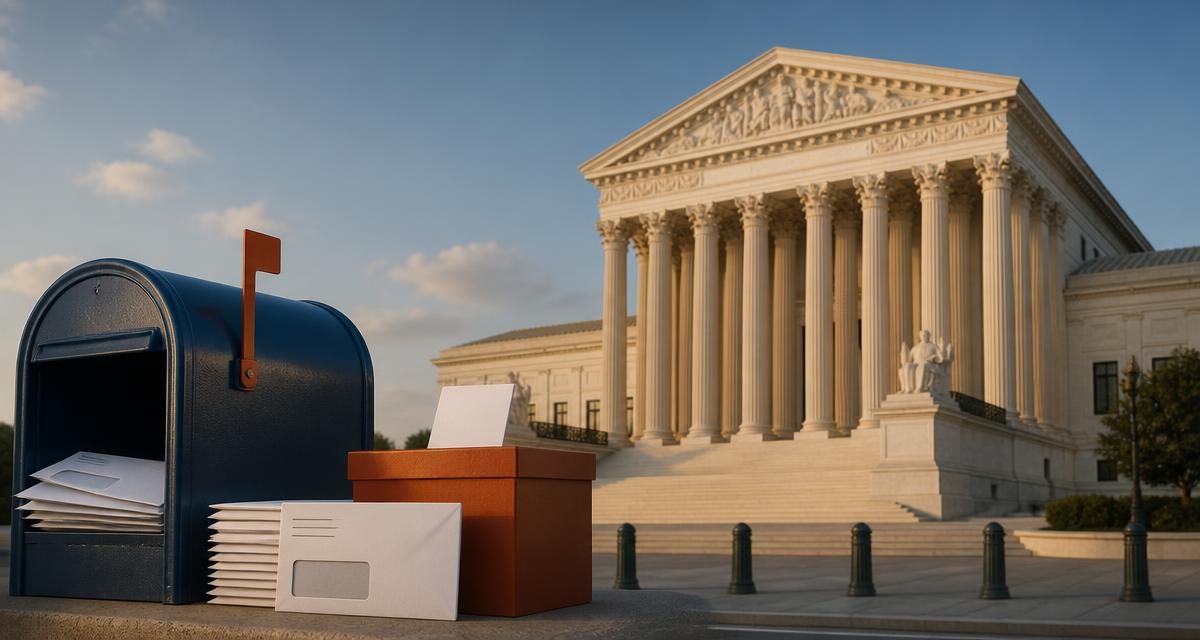
The Supreme Court declined to lift a preliminary injunction blocking the administration's new mail-ballot restrictions before the 2026 midterms. Existing state mail processes, which account for nearly one-third of votes, remain operational while litigation continues. Justices Samuel Alito and Clarence Thomas dissented; Justice Brett Kavanaugh indicated the merits could be considered later. This is a court decision about timing and likely legal success, not a final merits judgment. The separate proposed $5,000 adult payment remains unlegislated and unappropriated.
99% ConfidenceAP and Reuters support the order, dissents, lower-court posture and implementation effects. Administration election-security arguments and challengers' access claims remain adversarial positions. The Court's emergency order preserves the injunction for this election but does not permanently resolve Postal Service or presidential authority.
Central finding
The preliminary injunction remains operative for the midterms.
Existing state mail-ballot processes continue; two justices publicly dissented.
Evidence and limits
AP and Reuters support the order, dissents, lower-court posture and implementation effects. Administration election-security arguments and challengers' access claims remain adversarial positions. The Court's emergency order preserves the injunction for this election but does not permanently resolve Postal Service or presidential authority.
The Supreme Court did not issue a final merits ruling on federal authority.
Future implementation, litigation and election effects remain unresolved.
Why it matters
The decision reduces immediate election-administration disruption while leaving a consequential separation-of-powers dispute unresolved.
What changed
The Court kept the lower-court injunction in force, so states may continue existing mail-ballot processes for the midterms.
What comes next
Lower-court merits proceedings; any post-election Supreme Court review; Postal Service implementation; documented delivery failures or fraud; election certification; appropriations; and bill text or scoring for the $5,000 proposal.
U.S. strategic assessment
High interest
A divided or opposing Congress could delay appropriations, confirmations, tax legislation, rescissions, industrial measures, and other parts of the administration's program; those effects must be tied to specific votes and laws rather than assumed automatically.
Objectives
Protect U.S. security, economic resilience, and citizens using measurable, lawful action.
Strategy
Use primary records, allied coordination, market evidence, and independent verification to distinguish action from rhetoric.
Outcomes
No material control change occurred; the risk remains a forward congressional-continuity scenario.
Risks
The composition of the next Congress and the exact policy effect of divided government.