Iran/IRGC Rhetoric: Saudi bypass shuts as a second chokepoint comes under pressure
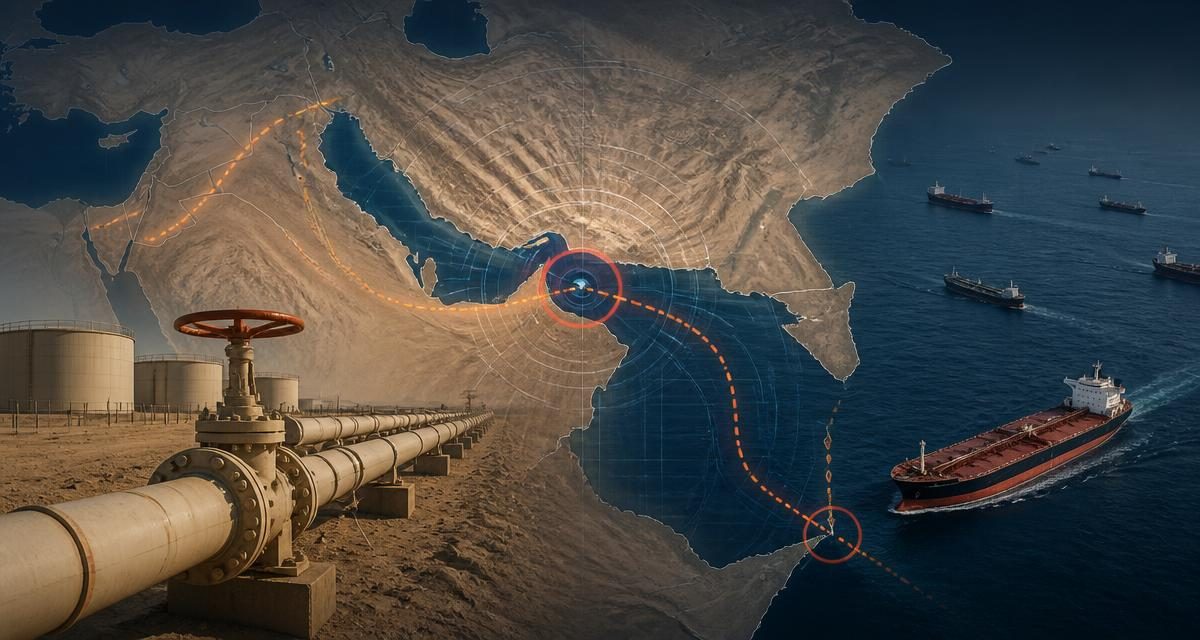
Saudi Arabia temporarily shut its East–West oil pipeline after an aerial attack while Iran-backed Houthis seized Mayun/Perim Island at the Bab el-Mandeb entrance. The Saudi system had been carrying roughly 4–5 million barrels per day around Hormuz; usable capacity is effectively zero until restoration. Kpler's latest located count showed seven AIS-visible commodity-vessel transits through Hormuz, down from 12, but protected vessels operating without transponders are excluded. Severe disruption is confirmed; complete closure is not. No joint White House-and-CENTCOM closure confirmation exists.
Central finding
- Saudi Arabia shut the East–West pipeline after an aerial attack.
- The system had been moving approximately 4–5 million barrels per day before the shutdown.
Evidence and limits
Reuters and AP independently support the pipeline shutdown and Houthi advance. EIA supplies the standing Saudi/UAE bypass baseline. The latest White House account citing CENTCOM says lanes were cleared and nearly 1,500 protected vessels carrying about 750 million barrels had transited. Saudi Arabia has not publicly attributed the pipeline attack; public evidence does not establish Tehran's direct command of this incident.
- The outage duration, damage extent and restoration date are undisclosed.
- Saudi Arabia has not attributed the attack to a named actor.
Why it matters
The principal land bypass around Hormuz and its Red Sea outlet are impaired or exposed at the same time, reducing redundancy and increasing fuel, freight, insurance and military-protection risk worldwide.
What changed
The operating Saudi bypass fell from roughly 4–5 million barrels per day to effectively zero while shut, and the Houthi advance increased pressure at Bab el-Mandeb.
What comes next
Saudi restoration notices and imagery; attribution evidence; CENTCOM protected-transit totals; UAE Fujairah throughput; Bab el-Mandeb movements; tanker insurance; and pipeline, Suez or Cape diversions.
What we know
- Seven AIS-visible commodity vessels transited in the newest located count; that is a lower bound.
- No joint White House-and-CENTCOM statement confirmed closure.
Material unknowns
- No reliable source separated current barrels among protected Hormuz transits, Fujairah, overland routes, Suez and Cape diversions.
U.S. strategic assessment
Critical interestU.S. strategy is weakening IRGC revenue and restoring protected navigation, but the remaining war and energy exposure keeps the consequence risk Critical.
Objectives
- Keep international lanes navigable.
- Deprive the regime and IRGC of oil and shadow-banking revenue.
- Protect U.S. forces, commercial shipping, allies, and Iranian civilians.
- Preserve Iranian self-determination in any political transition.
Strategy
- Use naval protection and mine clearance, a blockade of Iranian ports, named sanctions and correspondent restrictions, allied coordination, and humanitarian and information safeguards.
Outcomes
- Protected transit, mine clearance, export recovery, and specific financial-network actions are demonstrated; regime change is not.
Risks
- Iranian retaliation, civilian harm, energy shock, opposition fragmentation, repression, and an unstable or captured transition.
Sources
01CENTCOM-attributed protected-vessel and oil-transit totals.
Saudi and UAE bypass capacities, usable-spare baseline and bottlenecks.
Shutdown, pre-attack throughput and Red Sea risk.
Territorial advance and Bab el-Mandeb exposure.
Seven visible transits and transponder limitation.