Iran/IRGC Rhetoric: tanker war expands as visible Hormuz traffic falls
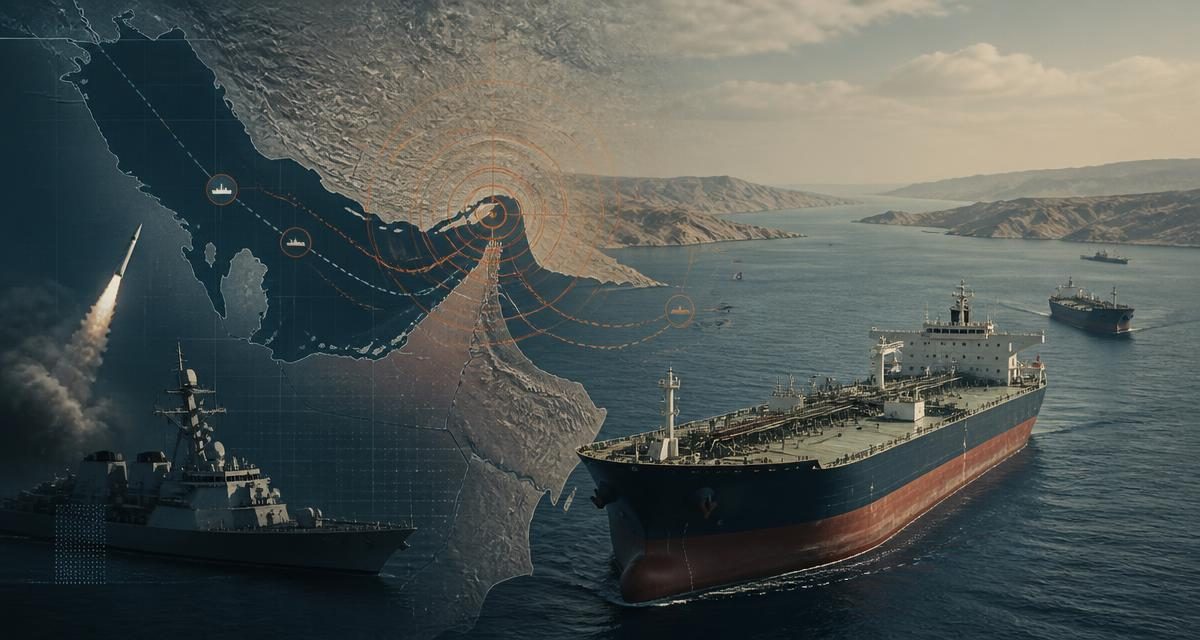
U.S. and Iranian attacks on shipping reached their largest declared wave of the war. CENTCOM confirmed that U.S. forces rendered five Iranian crude carriers inoperable after repeated IRGC missile attempts against a U.S. warship. Iran claimed attacks on two U.S. vessels and eight commercial tankers; independently reported incidents included one seafarer killed, another missing and multiple damaged ships. Six visible commodity vessels crossed Hormuz on September 8, below the 10-day average of 12, but AIS counts exclude dark or protected traffic and cannot prove closure. No joint White House-and-CENTCOM confirmation establishes that Iran has closed the Strait.
Central finding
- CENTCOM said five named Iranian crude carriers were rendered inoperable after crews were directed to abandon ship.
- Kpler counted six AIS-visible commodity-vessel transits on September 8, down from nine and below the 10-day average of 12.
Evidence and limits
CENTCOM directly confirms the five U.S. tanker strikes and absence of American casualties. Reuters, UKMTO, ship operators and regional officials corroborate multiple maritime incidents, the six-vessel AIS lower bound and Brent above $100. Iran's full ten-ship claim, missile performance and responsibility for every damaged vessel remain partly unverified. CENTCOM's description of an IRGC financing network is an official allegation, not a judicial finding.
- Iran's claimed attacks on all ten vessels and claimed missile capabilities are not fully independently verified.
- AIS-visible traffic omits vessels operating without transponders and is not a complete transit count or proof of closure.
Why it matters
Direct attacks on military and commercial vessels now pose acute risks to crews, energy supply, marine insurance, freight, inflation and regional escalation while increasing U.S. operational and replacement costs.
What changed
CENTCOM struck five additional Iranian tankers; Iran declared a ten-ship response and fired toward a U.S.-used base in Jordan; reported maritime attacks killed one seafarer and left another missing; visible Hormuz traffic fell to six; and Brent exceeded $100.
What comes next
White House and CENTCOM escorted-transit totals; verified damage and attribution; crew rescue and environmental effects; further tanker or base attacks; exclusion-zone enforcement; insurer action; and actual Saudi/UAE bypass throughput.
What we know
- A commercial seafarer was reported killed and another missing during the maritime escalation.
- The standing EIA baseline remains about 4.7 million barrels per day of stated Saudi and UAE bypass capacity; no reliable current source separated actual pipeline, protected-maritime and overland volumes.
Material unknowns
- CENTCOM's financing-network characterization has not been adjudicated, and the tanker strikes do not constitute a federal cash recovery.
U.S. strategic assessment
Critical interestU.S. strategy is weakening IRGC revenue and restoring protected navigation, but the remaining war and energy exposure keeps the consequence risk Critical.
Objectives
- Keep international lanes navigable.
- Deprive the regime and IRGC of oil and shadow-banking revenue.
- Protect U.S. forces, commercial shipping, allies, and Iranian civilians.
- Preserve Iranian self-determination in any political transition.
Strategy
- Use naval protection and mine clearance, a blockade of Iranian ports, named sanctions and correspondent restrictions, allied coordination, and humanitarian and information safeguards.
Outcomes
- Protected transit, mine clearance, export recovery, and specific financial-network actions are demonstrated; regime change is not.
Risks
- Iranian retaliation, civilian harm, energy shock, opposition fragmentation, repression, and an unstable or captured transition.
Sources
01Official U.S. account, named vessels and crew-safety procedures.
Standing alternative-pipeline capacity and bottleneck baseline.
Commercial incidents, casualties, Iranian claims, U.S. response and market effects.
Six visible transits, 10-day comparison and transponder limitation.