Iran/IRGC Rhetoric: exclusion-zone threat, proxy attacks and aviation sanctions widen pressure
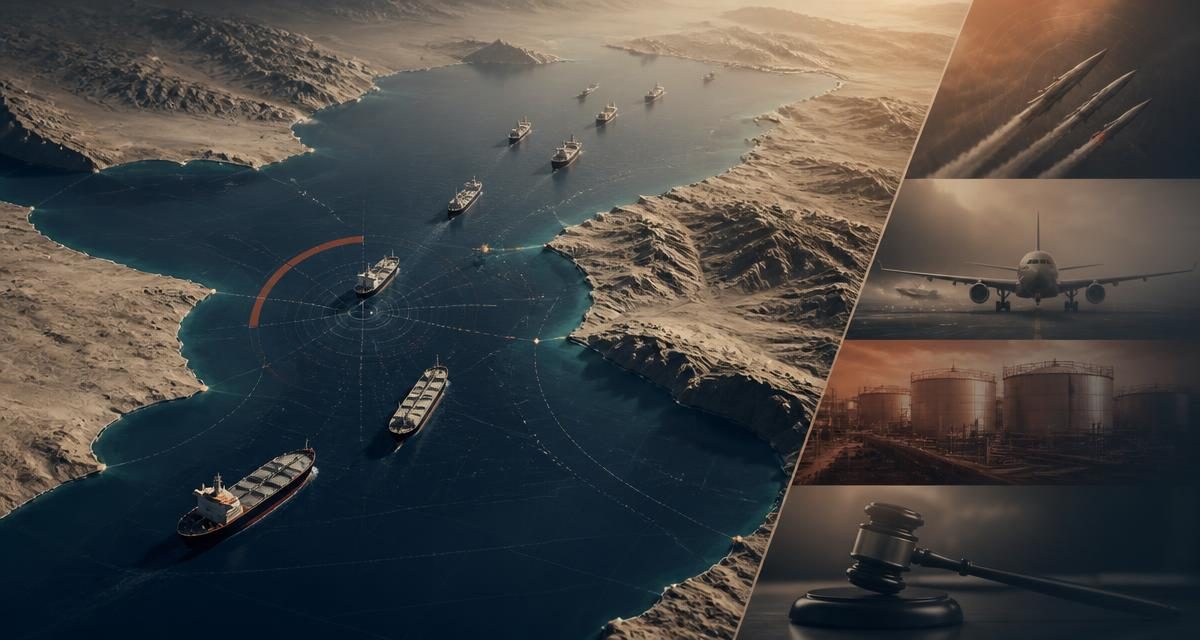
Iran threatened a new Gulf exclusion zone and claimed an advanced missile attack on U.S. warships; the U.S. says its ships evaded the attack. Kpler counted seven visible commodity-vessel transits on September 7, but AIS counts remain lower bounds and do not prove closure. Iran-backed Houthis struck four Saudi cities and energy sites, wounding 73 people. OFAC separately designated a civil-aviation support network and numerous Iranian airlines, suspended General License J-1 and issued wind-down licenses. No joint White House-and-CENTCOM confirmation establishes that Iran has closed the Strait.
Central finding
- Kpler counted seven visible commodity-vessel transits on September 7, down from eight the day before.
- Saudi authorities reported 73 people wounded in Houthi attacks on four cities and energy facilities.
Evidence and limits
Reuters and AP corroborate the attacks, shipping count and market reaction; OFAC directly records the September 8 designations and license changes. Iranian missile-performance claims remain unverified, AIS omits dark or protected traffic, and designation is an administrative action rather than a criminal conviction or cash recovery.
- Iran's missile-performance claim and any claimed drone shootdown were not independently verified at the cutoff.
- Public ship tracking excludes some military-escorted or otherwise dark traffic and cannot establish a complete closure.
Why it matters
The combined military, proxy, shipping and financial escalation raises crew-safety, energy, insurance, freight, inflation and defense-cost risks while testing whether U.S. pressure can constrain Iran without a wider regional war.
What changed
Visible commodity traffic fell to seven; Iran escalated exclusion-zone and missile rhetoric; Houthi attacks wounded 73 people and disrupted Saudi facilities; Brent briefly reached $99.46; and OFAC added an aviation support network and Iranian airlines to the SDN list while narrowing aviation-related licenses.
What comes next
White House and CENTCOM escorted-transit totals; exclusion-zone enforcement; further U.S., Iranian or Houthi attacks; mine activity; Saudi facility recovery; OFAC implementation; insurer behavior; and verified Saudi/UAE bypass throughput.
What we know
- OFAC's September 8 action added named Iranian airlines and Mahan-linked support entities to the SDN list and changed aviation-related general licenses.
- The standing EIA baseline remains about 4.7 million barrels per day of stated Saudi and UAE bypass capacity; no current source separated actual diverted pipeline, maritime and overland volumes.
Material unknowns
- OFAC designations block property subject to U.S. jurisdiction but do not establish that money was collected for the Treasury or reduced federal debt.
U.S. strategic assessment
Critical interestU.S. strategy is weakening IRGC revenue and restoring protected navigation, but the remaining war and energy exposure keeps the consequence risk Critical.
Objectives
- Keep international lanes navigable.
- Deprive the regime and IRGC of oil and shadow-banking revenue.
- Protect U.S. forces, commercial shipping, allies, and Iranian civilians.
- Preserve Iranian self-determination in any political transition.
Strategy
- Use naval protection and mine clearance, a blockade of Iranian ports, named sanctions and correspondent restrictions, allied coordination, and humanitarian and information safeguards.
Outcomes
- Protected transit, mine clearance, export recovery, and specific financial-network actions are demonstrated; regime change is not.
Risks
- Iranian retaliation, civilian harm, energy shock, opposition fragmentation, repression, and an unstable or captured transition.
Sources
01Named SDN additions, license suspension and wind-down authorizations.
Standing alternative-pipeline capacity and bottleneck baseline.
Visible shipping lower bound, Iranian rhetoric and tracking limitations.
Saudi attacks, casualties, energy sites and attributed missile claims.
Brent and WTI prices and physical-market context.