China Economy: exports surge while domestic demand remains weak
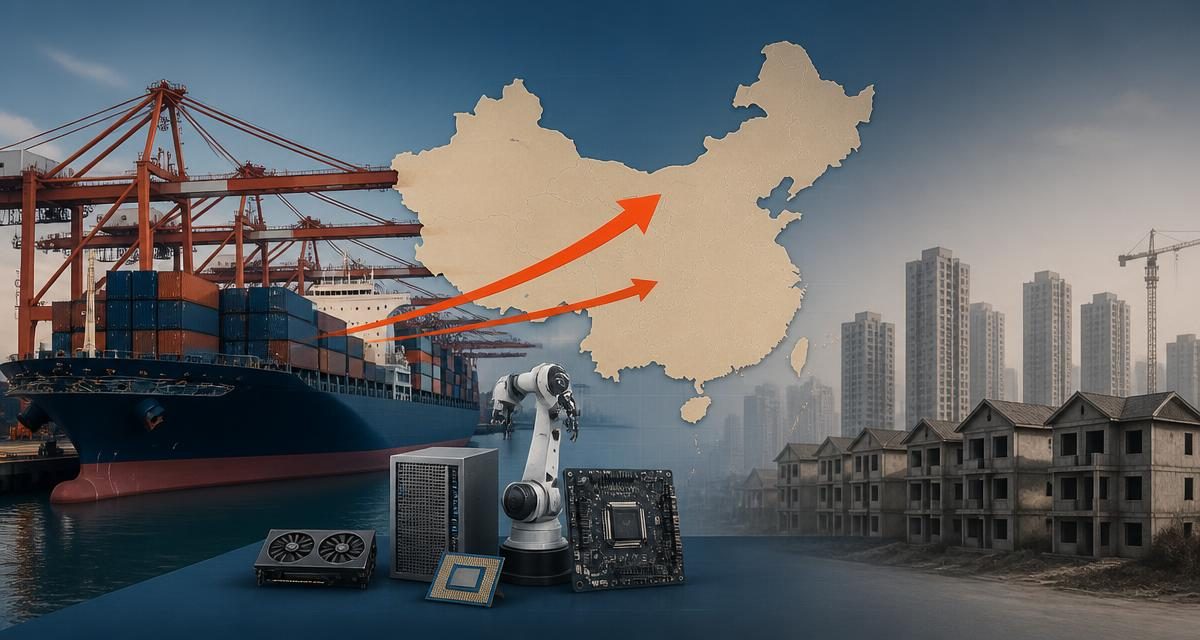
China's August exports rose 25% year over year and imports 28.2%, producing a $119.09 billion monthly trade surplus. High-technology and AI-related shipments supported external growth, while weak consumption, investment and property activity continued to limit evidence of a balanced domestic recovery.
Central finding
- August exports increased 25% year over year and imports 28.2%.
- The August trade surplus was about $119.1 billion.
Evidence and limits
Chinese customs data are corroborated by Reuters and AP. Strong year-over-year trade growth demonstrates external demand and production, not the health of household consumption, property balance sheets or private domestic investment.
- Trade strength does not establish a broad domestic-demand recovery.
- Future tariff and technology-policy changes could alter the export trajectory quickly.
Why it matters
Export strength reduces immediate growth pressure but deepens trade-imbalance and deindustrialization concerns among partners and leaves China exposed to tariff, technology and external-demand changes.
What changed
August exports accelerated to 25%, imports to 28.2%, and the monthly surplus widened to about $119.1 billion, led by autos, semiconductors and AI-related trade.
What comes next
Domestic retail and property data; private investment; bank margins; trade-partner restrictions; the U.S.–China truce; and whether export momentum produces broader household demand.
U.S. strategic assessment
High interestThe reported win modestly improves Chinese supply resilience but does not erase U.S. and allied advantages in leading equipment and advanced AI memory.
Objectives
- Protect advanced-technology advantages while preserving lawful trade and resilient supply chains.
Strategy
- Use targeted export controls, domestic investment, allied coordination, and evidence-based monitoring.
Outcomes
- Incremental Chinese memory progress is visible; strategic parity is not demonstrated.
Risks
- Overbroad restrictions, retaliation, accelerated substitution, and supply-chain price effects.
Sources
01Customs figures, technology mix and domestic-demand context.
Independent confirmation of exports, imports and trade surplus.