Iran/IRGC Rhetoric: direct naval attacks intensify as Hormuz traffic falls
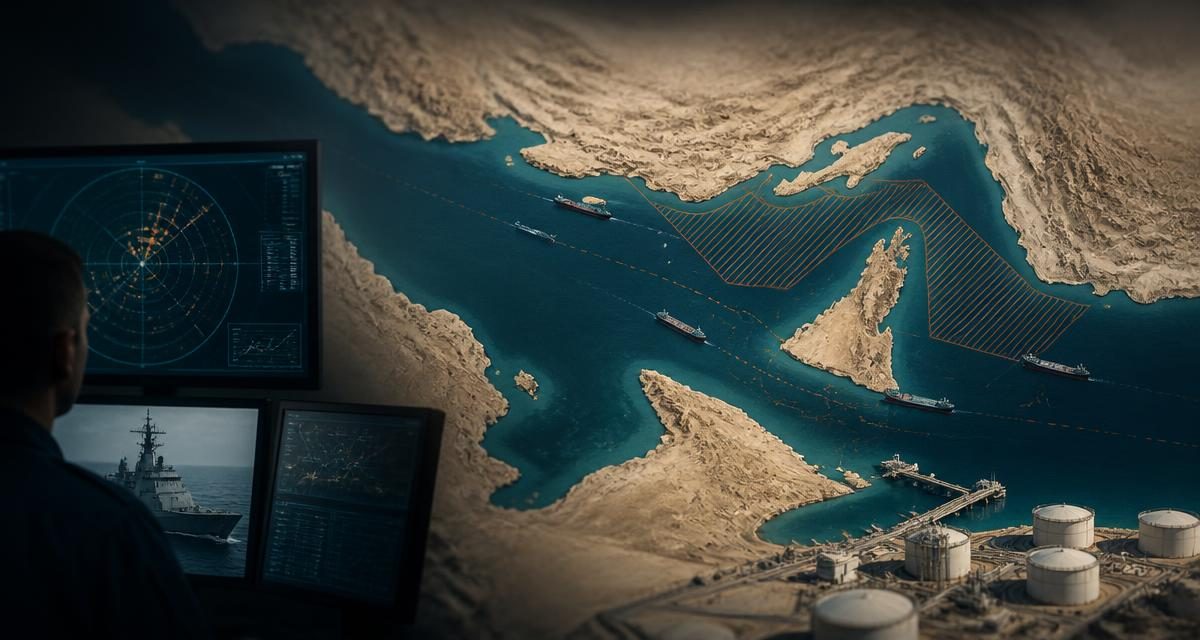
CENTCOM said it disabled or destroyed three Iranian crude carriers on September 5 after IRGC ballistic missiles targeted two U.S. Navy warships; no American personnel were harmed. Public vessel tracking put commodity transits near 10 per day, the lowest since May, but AIS counts remain lower bounds because escorted vessels may operate without transponders. Iran announced a restricted zone. No joint White House-and-CENTCOM confirmation establishes that Iran has closed the Strait.
Strategy gains, danger remains
The U.S. campaign is preserving a protected corridor and tightening financial isolation. Critical severity reflects the global consequence of a renewed attack, mining event, major miscalculation, or energy shock—not a finding that U.S. strategy is failing.
- Risk: Critical.
- Direction: easing.
- U.S. objective progress: improving.
Observed shipping and Iranian rhetoric
Iranian claims of control are attributed rhetoric. Protected transits contradict complete closure, while public AIS observations remain incomplete because escorted vessels may operate with transponders disabled.
Alternative capacity
Saudi and UAE systems have about 4.7 million b/d of stated bypass capacity, but earlier estimates placed readily usable capacity around 2.6 million b/d. Actual diversion remains constrained by terminals, crude compatibility, storage, pumping configuration, and tanker scheduling.
Political-transition evidence
Economic pressure and documented public opposition increase the plausibility of political change. They do not establish uniform public support, a transition timetable, or an orderly successor government.
What changed
IRGC missiles targeted two U.S. Navy warships; CENTCOM struck three Iranian crude carriers; public commodity-vessel traffic fell near 10 daily; and Iran announced a restricted navigation zone.
Why it matters
The new exchange demonstrates both U.S. retaliatory capacity and a materially more dangerous operating environment for military and commercial vessels.
What to watch next
White House and CENTCOM escorted-transit totals; further attacks; restricted-zone enforcement; crew safety; mine activity; insurance and freight rates; and verified Saudi and UAE bypass volumes.
What we know
- CENTCOM said two U.S. Navy warships evaded IRGC ballistic-missile attacks and no American personnel were harmed.
- CENTCOM said it disabled M/T Downy and M/T Stark 1 and destroyed M/T Kylo/Noxen after its crew abandoned ship.
- Public tracking placed commodity-vessel transits near 10 per day, but this excludes some protected vessels operating without AIS.
- No joint White House-and-CENTCOM statement confirmed complete closure at the cutoff.
- The standing EIA baseline remains about 4.7 million barrels per day of stated Saudi and UAE bypass capacity, with roughly 2.6 million barrels per day estimated usable.
Material unknowns
- CENTCOM's description of the tankers as an IRGC funding shadow network is an official allegation, not a judicial finding.
- Public ship tracking cannot establish complete transit totals or prove closure.
- No new verified expansion or activation materially changed the established Gulf bypass-pipeline baseline.
U.S. strategic assessment
Critical interestU.S. strategy is weakening IRGC revenue and restoring protected navigation, but the remaining war and energy exposure keeps the consequence risk Critical.
Objectives
- Keep international lanes navigable.
- Deprive the regime and IRGC of oil and shadow-banking revenue.
- Protect U.S. forces, commercial shipping, allies, and Iranian civilians.
- Preserve Iranian self-determination in any political transition.
Strategy
- Use naval protection and mine clearance, a blockade of Iranian ports, named sanctions and correspondent restrictions, allied coordination, and humanitarian and information safeguards.
Outcomes
- Protected transit, mine clearance, export recovery, and specific financial-network actions are demonstrated; regime change is not.
Risks
- Iranian retaliation, civilian harm, energy shock, opposition fragmentation, repression, and an unstable or captured transition.
Sources
01Official account of the attempted attacks, U.S. response and crew-safety actions.
Standing alternative-pipeline capacity, usable-capacity and bottleneck baseline.
Oil prices, public vessel-tracking lower bound and restricted-zone reporting.
Independent economic-pressure and resilience cross-check.