Iran/IRGC Rhetoric: protected lanes remain open as visible traffic falls
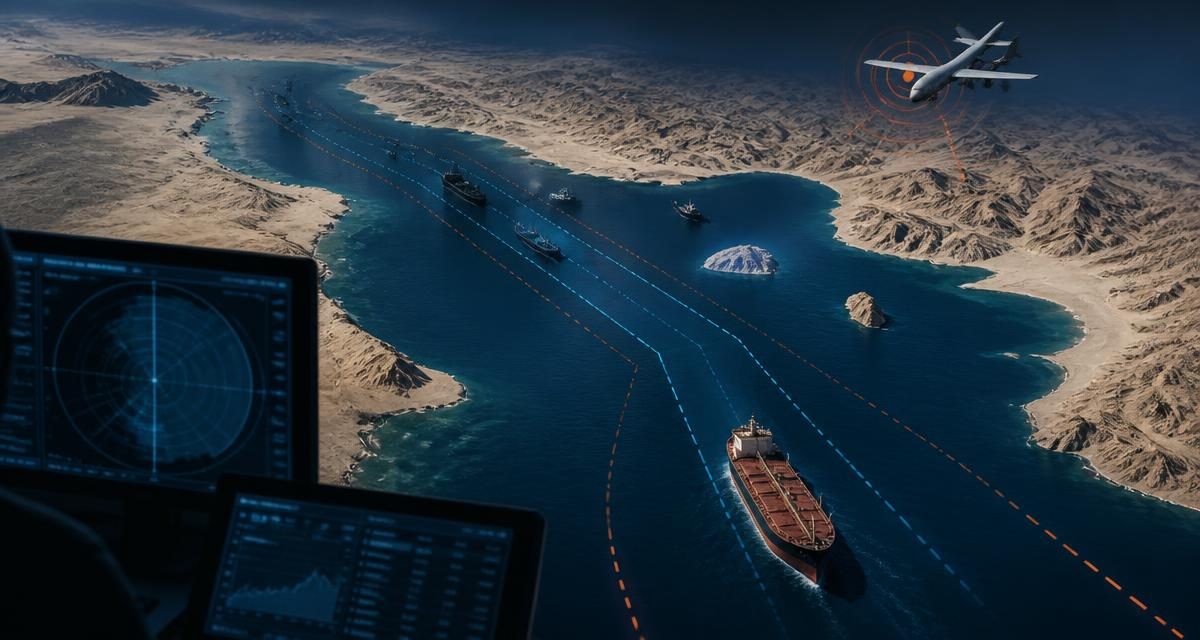
The White House, explicitly citing CENTCOM, still says international lanes are cleared and nearly 1,500 protected commercial vessels carrying about 750 million barrels have transited. Kpler detected only five AIS-visible commodity-vessel transits Monday, versus a ten-day average of 14, but transponder-dark protected vessels were excluded. The UAE reported intercepting an Iranian drone; Iranian media claimed a Saudi tanker was stopped, without independent confirmation.
Strategy gains, danger remains
The U.S. campaign is preserving a protected corridor and tightening financial isolation. Critical severity reflects the global consequence of a renewed attack, mining event, major miscalculation, or energy shock—not a finding that U.S. strategy is failing.
- Risk: Critical.
- Direction: easing.
- U.S. objective progress: improving.
Observed shipping and Iranian rhetoric
Iranian claims of control are attributed rhetoric. Protected transits contradict complete closure, while public AIS observations remain incomplete because escorted vessels may operate with transponders disabled.
Alternative capacity
Saudi and UAE systems have about 4.7 million b/d of stated bypass capacity, but earlier estimates placed readily usable capacity around 2.6 million b/d. Actual diversion remains constrained by terminals, crude compatibility, storage, pumping configuration, and tanker scheduling.
Political-transition evidence
Economic pressure and documented public opposition increase the plausibility of political change. They do not establish uniform public support, a transition timetable, or an orderly successor government.
What changed
Kharg Island was confirmed as a warning rather than an attack, but visible shipping declined and the UAE reported an Iranian drone incursion.
Why it matters
Critical measures the possible consequence of renewed attacks and energy disruption, not whether U.S. strategy is succeeding.
What to watch next
Direct CENTCOM transit totals, the alleged Saudi tanker's identity, mine or drone incidents, weekly Treasury sanctions, Iran–Oman diplomacy, and Chinese or Indian compliance.
What we know
- The White House says nearly 1,500 protected vessels carried about 750 million barrels through cleared lanes.
- Kpler counted five AIS-visible commodity-vessel transits Monday; transponder-dark vessels were excluded.
- No new bypass-pipeline activation or expansion was verified; Saudi and UAE systems retain about 4.7 million b/d stated capacity and about 2.6 million b/d previously estimated readily usable capacity.
Material unknowns
- The Saudi-tanker claim is unconfirmed.
- No reliable source separated current exports into protected maritime, pipeline, and overland volumes.
- Nationwide Iranian support for regime change or foreign intervention cannot be measured reliably under wartime authoritarian conditions.
U.S. strategic assessment
Critical interestU.S. strategy is weakening IRGC revenue and restoring protected navigation, but the remaining war and energy exposure keeps the consequence risk Critical.
Objectives
- Keep international lanes navigable.
- Deprive the regime and IRGC of oil and shadow-banking revenue.
- Protect U.S. forces, commercial shipping, allies, and Iranian civilians.
- Preserve Iranian self-determination in any political transition.
Strategy
- Use naval protection and mine clearance, a blockade of Iranian ports, named sanctions and correspondent restrictions, allied coordination, and humanitarian and information safeguards.
Outcomes
- Protected transit, mine clearance, export recovery, and specific financial-network actions are demonstrated; regime change is not.
Risks
- Iranian retaliation, civilian harm, energy shock, opposition fragmentation, repression, and an unstable or captured transition.
Sources
01CENTCOM-attributed figures for cleared lanes, protected vessels, oil carried, and export recovery.
Standing bypass-pipeline capacity and bottleneck evidence.
Independent Kpler transit counts and AIS limitation.
Independent report that Kharg was not struck and the post was strategic messaging.
Regional incident cross-check.