U.S. Technology Expansion & Industrial Capacity
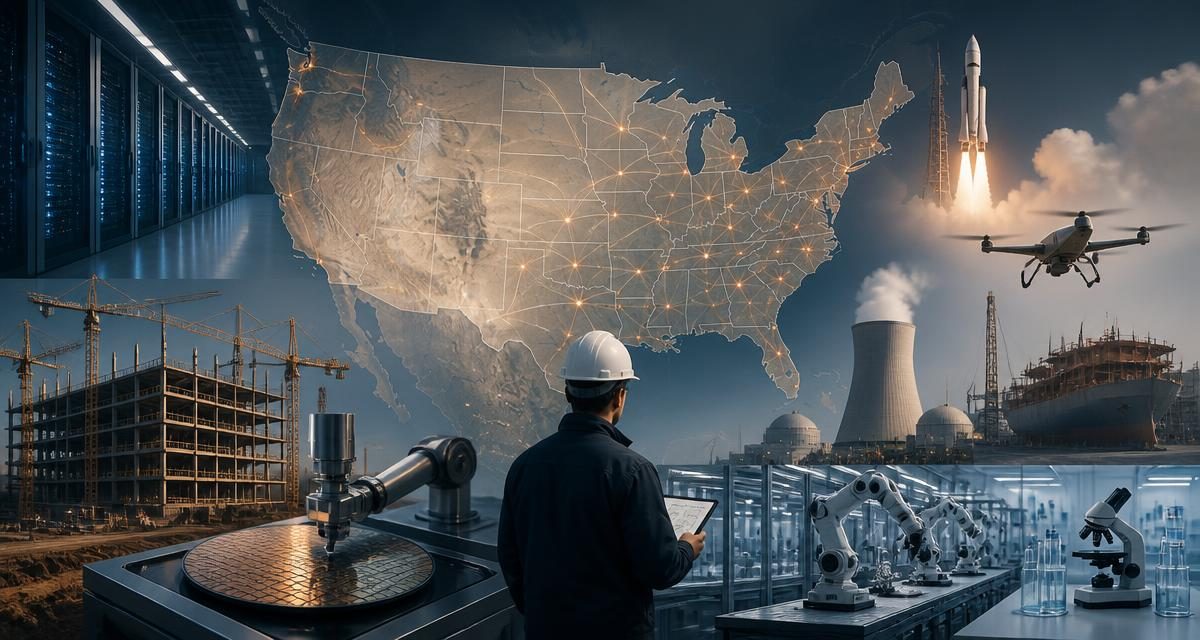
The standing portfolio is advancing unevenly. AI models and data centers attract the largest capital plans but face power constraints; semiconductor fabs and packaging facilities remain in varied construction stages; nuclear, quantum, robotics, space, biotechnology, telecommunications and advanced manufacturing have active programs but limited comparable completed-capacity data. The August 20 space memorandum and August 13 drone and shipbuilding actions increased policy execution without proving commercial output.
What changed
The National Space Transportation Policy became the newest major technology directive; no verified leap in operating capacity occurred in the window.
Why it matters
Technology leadership supports productivity, defense, supply-chain security and geopolitical leverage.
What to watch next
Project commissioning, audited capital expenditure, power interconnections and congressional appropriations.
What we know
- The August 20 National Space Transportation Policy is a presidential memorandum, not legislation.
- The August 13 UAS import action and shipbuilding memorandum create policy direction but do not establish new operating output.
- AI and data-center expansion remain constrained by chips, power, transmission and workforce.
- Projects inherited from earlier policy pipelines must not be counted as entirely new without evidence.
Material unknowns
- Capital actually spent
- Domestic-content shares
- Grid delivery schedules
- Commercial certification timelines
U.S. strategic assessment
Critical interestThe administration is integrating AI, space, drones, shipbuilding, semiconductors, nuclear and critical minerals. Execution is strongest in directives and permitting; evidence is weakest on capital spent, commissioned capacity and attributable employment.
Objectives
- Expand domestic technology capacity
- Reduce China-sensitive dependencies
- Accelerate commercial deployment
- Convert innovation into defense and productivity gains
Strategy
- Permitting and procurement
- Import adjustment and export controls
- Public-private investment
- Standards and national-security policy
Outcomes
- New presidential actions in space and drones
- Continued AI/data-center buildout
- Incomplete verified production and employment results
Risks
- Power and grid bottlenecks
- Advanced semiconductor dependence
- Cyber and data-security exposure
- Cost overruns and workforce shortages
Sources
01Space, drone, shipbuilding and AI directives
AI, cybersecurity, quantum and standards
Power, nuclear and laboratory programs
Semiconductors, export controls and telecom
Conservative China-competition and technology-security challenge
Market and technology-investment cross-check