Asian states accelerate semiconductor and maritime-security positioning amid U.S.-China competition
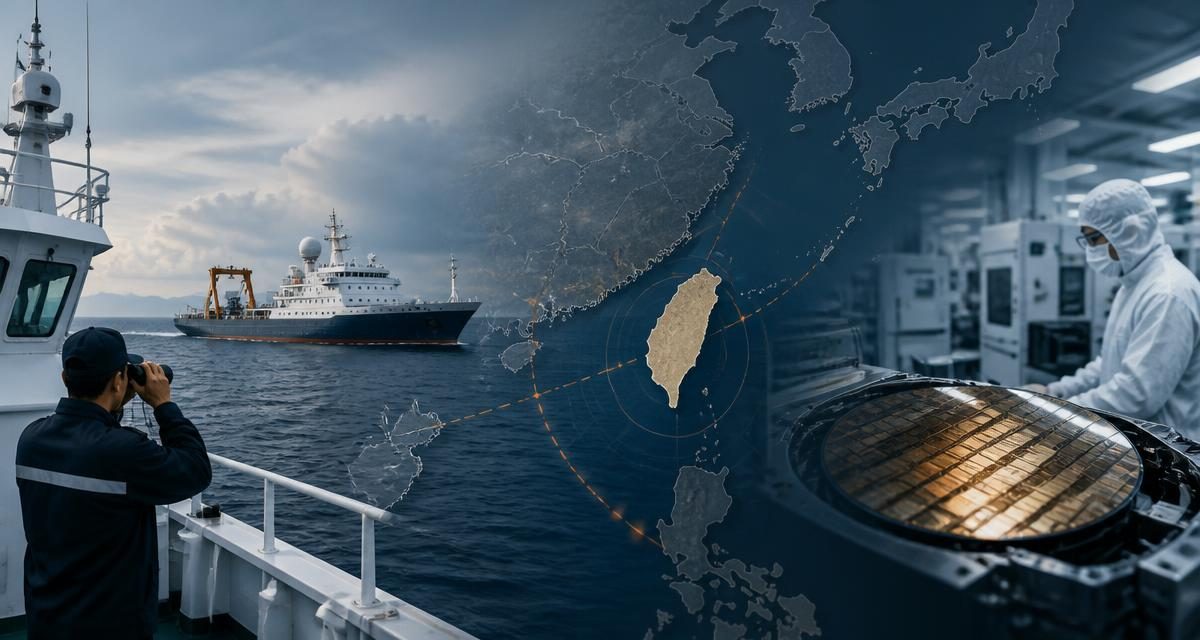
Taiwan’s coast guard warned and shadowed a Chinese research vessel in sensitive waters west of the island, the vessel’s third such appearance since May. Separately, Japan reportedly earmarked another roughly $944 million for Rapidus, reinforcing state-backed efforts to establish advanced domestic chip capacity. These developments show the security and industrial dimensions of Indo-Pacific technology competition converging.
What changed
Taiwan reported another Chinese vessel operation near sensitive waters, while Japan’s additional Rapidus support indicated continued willingness to use public capital in the AI-chip race.
Why it matters
Taiwan is central to advanced semiconductor supply, while Japan’s Rapidus project is intended to diversify leading-edge manufacturing. Maritime coercion or a chip-production delay would affect global defense, AI, automotive and electronics supply chains.
What to watch next
Chinese vessel activity and survey patterns; Taiwan enforcement actions; Japanese Diet appropriations; Rapidus pilot-line yields and customer commitments; U.S.-Japan export-control alignment.
What we know
- Taiwan’s coast guard said it warned and shadowed a Chinese research vessel west of Taiwan.
- Taiwan described the event as the vessel’s third appearance since May.
- Japan was reported to be planning additional state support for Rapidus.
- Semiconductor industrial policy is increasingly tied to national-security objectives.
Material unknowns
- The Chinese vessel’s actual mission and whether it conducted unauthorized seabed or communications-route mapping.
- Whether all reported Rapidus funds were finally appropriated and disbursed.
- Whether Rapidus can reach competitive yields and commercial scale on schedule.
U.S. strategic assessment
Critical interestThe United States seeks to deter coercion around Taiwan, preserve access to advanced chips and build allied semiconductor redundancy. Its instruments include military presence, Taiwan support, export controls, investment screening and industrial subsidies. The intended outcome is deterrence and diversified production; observed outcomes include greater allied investment but continued Chinese gray-zone activity and unresolved commercial execution risk.
Objectives
- Deter a blockade, invasion or coercive change to Taiwan’s status.
- Protect semiconductor and undersea-infrastructure supply chains.
- Limit transfer of leading-edge capabilities to Chinese military or surveillance programs.
- Expand trusted allied and U.S. chip capacity.
Strategy
- Regional military posture and partner capacity building.
- Export controls and investment restrictions.
- Subsidies, tax incentives and allied industrial coordination.
- Support for maritime-domain awareness and resilience.
Outcomes
- Taiwan continues to contest Chinese gray-zone operations without escalation to open conflict.
- Japan is committing substantial public support to an advanced-chip alternative.
- Commercially proven leading-edge diversification remains incomplete.
Risks
- Accidental maritime escalation.
- Chinese mapping or pressure against cables and infrastructure.
- Duplicative subsidies without viable commercial demand.
- Retaliatory mineral or technology restrictions by China.
Sources
01Independent original reporting with Taiwanese official attribution
Primary source for Taiwanese maritime enforcement announcements
Aggregation identifying Bloomberg’s Rapidus report; not independent corroboration
Primary Japanese industrial-policy context
Regional market cross-check, including South Korean semiconductor labor developments