U.S. Technology Expansion & Industrial Capacity
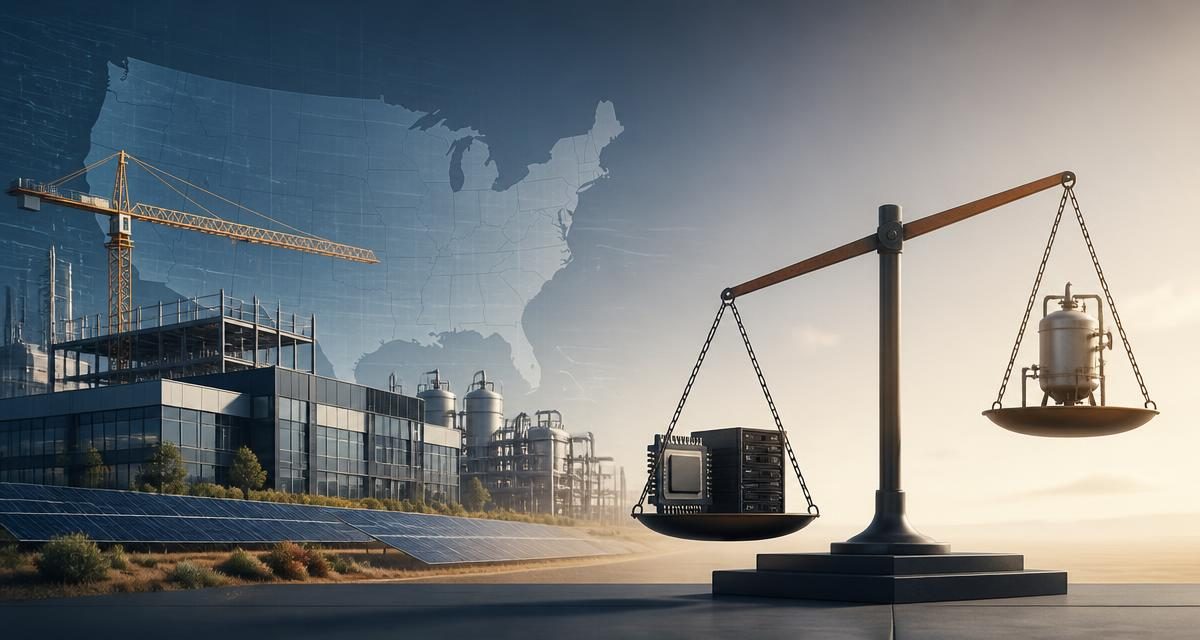
The United States continues aggressive technology-capacity policy, but measurable operating capacity and durable strategic advantage lag policy ambition.
What changed
No material new commissioning was verified; trade and energy developments increased input and power uncertainty.
Why it matters
AI, semiconductors, power, telecom and strategic manufacturing underpin productivity and national security.
What to watch next
Grid approvals, fab and data-center commissioning, project filings and productivity data.
What we know
- AI and data-center expansion remains a central administration objective.
- Semiconductor and critical-mineral tariffs support domestic capacity goals.
- Power, transmission and workforce constraints remain unresolved.
- No major newly commissioned capacity was verified in the window.
Material unknowns
- Commissioned megawatts and compute
- Domestic-content shares
- Actual capital spent
U.S. strategic assessment
Critical interestThe portfolio is expanding, but announcements and tariffs do not establish operating fabs, energized data centers or realized productivity.
Objectives
- Lead in AI and compute
- Expand semiconductor and packaging capacity
- Secure minerals and energy inputs
- Strengthen cyber and telecom resilience
Strategy
- AI Action Plan
- Tariffs and industrial policy
- Permitting and energy expansion
- Agency standards and procurement
Outcomes
- Policy and tariff instruments are active.
- Operating-capacity evidence remains uneven.
- No reporting-window completion changed the national baseline.
Risks
- Grid congestion
- Advanced-chip dependence
- Cybersecurity and sensitive-data exposure
- Workforce gaps and capital overruns
Sources
01Administration strategy
Semiconductor and mineral instruments
Workforce baselines
Power and energy context
Administration industrial-policy assessment