Fighting and seasonal flooding compound mass displacement across Kordofan and Darfur
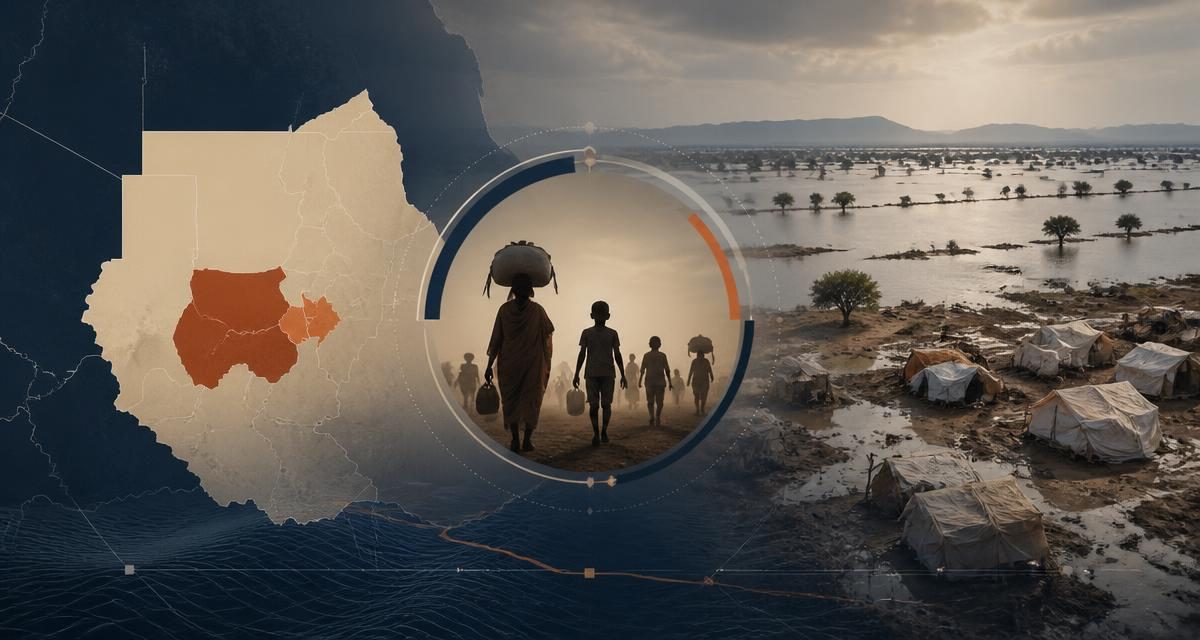
More than 200,000 people have been displaced across Kordofan since late 2025 as fighting between the Sudanese Armed Forces and Rapid Support Forces intensifies. Drone attacks have damaged critical services around El Obeid, while floods in North Darfur have damaged homes and complicated aid access. The 24-hour development is less a discrete battlefield reversal than confirmation that conflict, infrastructure attack and climate exposure are merging into a wider humanitarian emergency.
What changed
Fresh displacement reporting quantified the Kordofan movement at more than 200,000 while floods and attacks on water and power infrastructure increased immediate civilian vulnerability.
Why it matters
Kordofan is a geographic bridge between Darfur and central Sudan; destabilization threatens aid corridors, food supply, regional migration and expansion of the civil war.
What to watch next
Control of routes around El Obeid; access for IOM, WFP and local responders; flood-related disease; civilian casualties; new cross-border flows; attacks on water, power and health facilities.
What we know
- More than 200,000 people have been displaced across Kordofan since the end of 2025.
- Fighting between SAF and RSF-aligned forces has intensified.
- Flooding has damaged homes in North Darfur.
- Critical civilian infrastructure around El Obeid has been targeted or disrupted.
Material unknowns
- The number displaced specifically during the latest 24 hours.
- The full casualty count and responsibility for individual attacks.
- Whether either belligerent can consolidate territorial gains.
- The scale of unreported cholera, hunger and flood mortality.
U.S. strategic assessment
High interestThe United States seeks civilian protection, humanitarian access, regional stability and reduced external support to the belligerents. Its instruments remain sanctions, diplomacy, aid and coordination with regional partners. These tools have not produced a durable ceasefire, and allied Gulf objectives may diverge from Washington's stated humanitarian priorities.
Objectives
- Secure a ceasefire and humanitarian access.
- Prevent mass atrocities and wider regional destabilization.
- Limit external military support to SAF and RSF.
- Protect Red Sea security and neighboring U.S. partners.
Strategy
- Targeted sanctions and diplomatic pressure.
- Humanitarian financing through UN and nongovernmental partners.
- Engagement with African Union, Gulf and regional governments.
- Documentation and accountability support for atrocities.
Outcomes
- No durable ceasefire has been achieved.
- Displacement and infrastructure destruction continue.
- Humanitarian operations remain underfunded and access-constrained.
- Regional actors retain leverage that exceeds that of humanitarian diplomacy.
Risks
- State fragmentation and durable militia rule.
- Famine, cholera and flood mortality.
- Refugee pressure on Chad, South Sudan, Egypt and Ethiopia.
- External competition turning Sudan into a prolonged proxy conflict.
Sources
01Primary displacement-tracking institution
Original Sudan-focused reporting using IOM data and local sources
Sudanese regional reporting on displacement, flooding and aid conditions
U.S. aggregation and humanitarian framing
Primary humanitarian-access and needs reporting