Business & Industry Conditions: AI Demand Supports Investment While Tariff and Credit Risks Rise
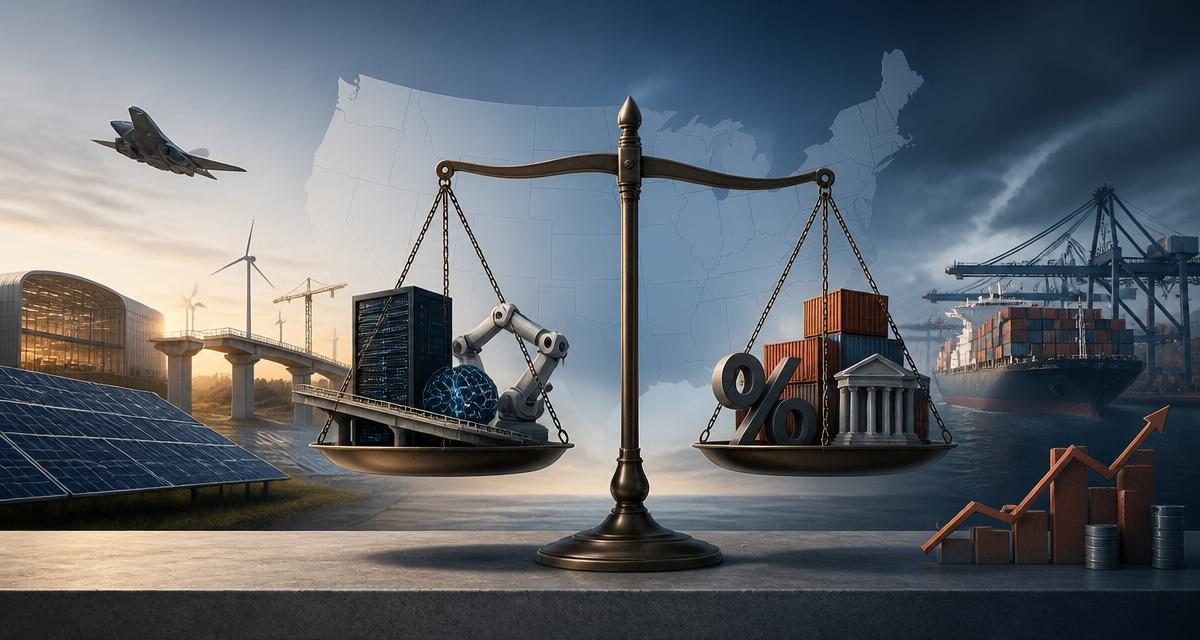
Business conditions remain bifurcated: AI, defense and infrastructure enjoy demand, while trade-sensitive and credit-dependent firms face rising uncertainty.
What changed
Tariff conflict with Canada escalated while AI-related semiconductor demand remained strong.
Why it matters
Business survival, hiring, output and capital spending determine whether policy announcements become durable prosperity.
What to watch next
Industrial production, orders, bankruptcy, lending, hiring and company capital-expenditure filings.
What we know
- AI and infrastructure demand support selected sectors.
- Canada retaliation and potential China tariffs increase uncertainty for exporters and import-dependent firms.
- Consumer confidence weakened in August.
- No 48-hour hard-data release established broad changes in output, closures or capital spending.
Material unknowns
- Small-business survival
- Capital actually spent
- Tariff margin effects
U.S. strategic assessment
High interestThe strongest national-interest case is that trade leverage, energy and deregulation can support production. The strongest challenge is that tariffs and deficits can raise costs and financing burdens before capacity arrives.
Objectives
- Raise domestic investment and output
- Improve small-business conditions
- Strengthen supply chains
Strategy
- Tariffs and trade agreements
- Permitting and deregulation
- Energy and industrial policy
- Tax and procurement measures
Outcomes
- Strong selected technology demand
- No broad window-specific hard-data acceleration verified
Risks
- Input inflation
- Retaliation
- Refinancing stress
- Project delays
Sources
01Business applications
Output and capacity utilization
Small-business survey evidence
Libertarian challenge on tariffs and deficits
Independent business reporting