Climate-policy rollback advances as European heat strains firm power
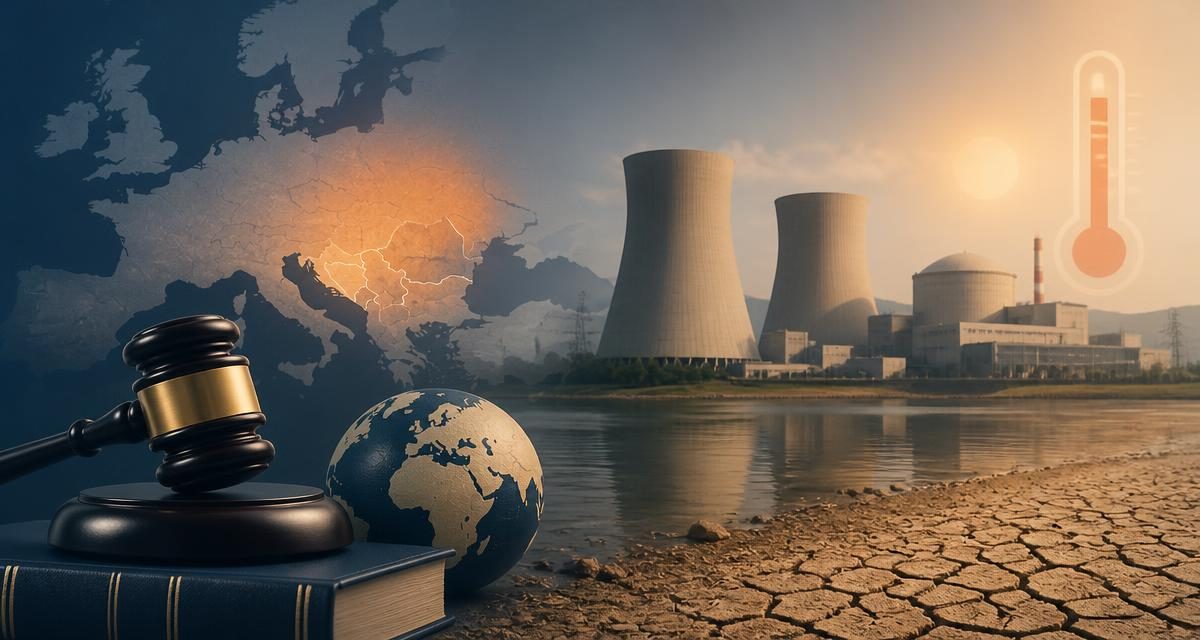
The administration has achieved a major procedural climate-policy objective by finalizing the Endangerment Finding rescission. Scientific and economic consequences remain contested and unmeasured. Romania's nuclear shutdown highlights a separate physical-risk question: reliable generation can still depend on climate-sensitive water systems.
What changed
No new U.S. climate rule was identified inside the 24-hour window, but the materially active February 12 rescission remains the administration's defining operative action. European reporting continued to document energy-security consequences of low river levels. No substantiated evidence of dataset fraud, concealed manipulation, or a climate-finance scam material to these developments was identified; methodological and policy disputes should not be mislabeled as fraud. The Green New Deal remains a resolution and family of proposals, not a single enacted federal law.
Why it matters
Climate-policy reversals affect U.S. vehicle costs, emissions, legal authority, industrial investment, and diplomacy, while Romania's nuclear shutdown illustrates physical reliability risks from heat and low river flow.
What to watch next
Litigation filings, state vehicle-standard responses, Danube levels, reactor restart status, and updated NOAA and European climate datasets.
What we know
- EPA finalized rescission of the 2009 Endangerment Finding and federal motor-vehicle greenhouse-gas standards on February 12, 2026.
- The administration argues the Clean Air Act does not authorize vehicle standards aimed at global climate change and describes the action as a major cost-saving deregulation.
- Romania's Cernavoda nuclear plant experienced shutdowns amid record-low Danube levels following heat and low rainfall; this is evidence of operational vulnerability, not by itself a quantified attribution study.
- Long-run warming is supported by multiple instrumental datasets, but attribution of any single heat or low-water episode requires event-specific analysis.
Material unknowns
- Court treatment of the EPA rescission.
- Final consumer and manufacturer cost effects.
- Formal attribution of the European heat and low-water event.
- Long-term U.S. emissions and diplomatic consequences.
U.S. strategic assessment
High interestThe administration prioritizes affordability, fossil-energy production, consumer choice, and narrow statutory interpretation over federal GHG mandates. Intended benefits are lower vehicle and compliance costs; observed net savings, emissions effects, and court durability remain unresolved.
Objectives
- Reduce federal regulatory costs and preserve consumer vehicle choice.
- Increase reliable domestic energy supply.
- Reject international commitments the administration considers economically coercive.
- Defend the rescission in court.
Strategy
- Rescind the Endangerment Finding and downstream vehicle standards.
- Expand fossil, nuclear, grid, and domestic manufacturing capacity.
- Withdraw from or reduce participation in multilateral climate bodies.
- Contest state and international rules viewed as extraterritorial or coercive.
Outcomes
- The rescission is finalized and operative unless stayed or vacated.
- No complete ex-post household cost or emissions assessment is available.
- European low-water conditions demonstrate that firm generation also has climate and water dependencies.
Risks
- Courts may vacate or remand the rescission.
- Vehicle manufacturers may face fragmented federal, state, and export-market rules.
- Heat, drought, floods, and water constraints can disrupt both thermal and renewable generation.
- Withdrawal from climate institutions can reduce U.S. leverage over foreign carbon-related trade measures and finance conditions.
Sources
01Primary final-action fact sheet and legal rationale
Controlling legal background on Clean Air Act authority
Independent reporting on Romania's reactor shutdown and low-water conditions
European cross-check of Romanian electricity and Danube impacts
Auditable instrumental climate-trend datasets
Searched for conservative critique of climate regulation and costs; commentary not treated as outcome evidence