Hormuz talks lower oil prices without establishing a verified reopening settlement
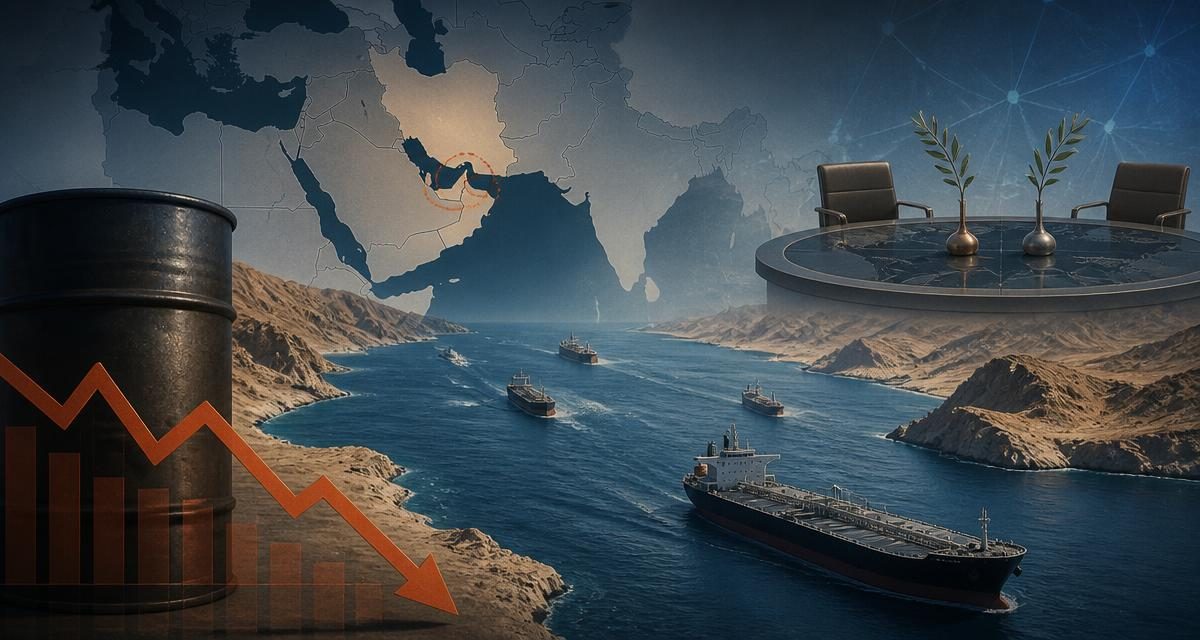
Oil markets reacted to reports of Iran–Oman and Iran–Qatar diplomacy, but the available evidence did not establish a jointly confirmed legal and operational settlement for Hormuz. U.S. pressure remains broader than the Strait: military operations, sanctions, force protection, support for partners and measures aimed at Iranian financial networks continue, while ordinary Iranians face repression, economic pain and war risk.
People carrying the stakes
Ordinary Iranians, Gulf residents, mariners and energy-consuming households bear the immediate stakes. Iranian opposition is diverse: hostility to clerical repression does not establish support for one exile group, foreign war or broad sanctions.
- NCRI claims require corroboration because it is an organized opposition coalition.
- Representative public opinion inside Iran remains difficult to measure safely.
The underlying conflict
Iranian state repression, proxy warfare and threats to shipping form the documented background to the U.S. pressure campaign. Opposition claims, Iranian official statements and independent evidence remain separate evidence classes.
How pressure escalated
U.S. responses progressed from diplomatic rupture and sanctions to counterterrorism, financial-network restrictions, military force protection and current regional operations. Announced sanctions or strikes are not proof that a network was dismantled or strategic objectives achieved.
Military scale and evidence gaps
White House, CENTCOM, Israeli and Iranian casualty or damage figures should be treated as official assessments unless independently corroborated. The available 24-hour evidence did not support a complete updated leadership-removal or battle-damage ledger.
The financial campaign
Treasury designations can block named banks, vessels, traders, exchange houses or front companies under U.S. jurisdiction. A designation is not equivalent to assets recovered, criminal conviction or elimination of the network.
Hormuz and energy routes
Reuters reported that oil extended losses as markets assessed talks involving Iran, Oman and Qatar. Market expectations do not themselves establish a binding navigation accord or verified change in operational control.
- U.S. crude inventories were reported at 428.9 million barrels for the week ended August 21.
- AIS observations remain lower bounds.
Alternative supply
Saudi Arabia's East–West Pipeline and the UAE's Fujairah route can carry crude outside Hormuz. Current exact throughput was not verified at cutoff, and nameplate capacity must not be described as incremental diverted flow.
Hope and civilian support
Operative humanitarian authorizations for food, medicine and communications should remain distinct from military operations and broad sanctions. Future support must preserve Iranian self-determination and protect dissidents and civilians.
What comes next
The decisive tests are a jointly verified maritime status, observed shipping and bypass flows, independently assessed military damage, sanctions enforcement results and evidence that support reaches civilians without IRGC diversion.
What changed
Oil prices extended losses as markets priced possible diplomatic progress; no verified closure-status determination was found.
Why it matters
Hormuz disruption affects global oil and LNG supply, U.S. forces, Gulf partners and ordinary Iranians already facing war, repression and sanctions.
What to watch next
White House and CENTCOM status statements, agreement text, observed shipping, insurance rates and current IEA/EIA flow data
What we know
- Reuters reported falling oil prices as traders assessed talks involving Iran, Oman and Qatar.
- No closure or reopening should be declared without confirmation from both the White House and CENTCOM.
- Saudi and UAE crude bypass infrastructure provides substantial resilience; Qatar LNG lacks a comparable short-term alternative.
- IEA's April and June 2026 figures are historical benchmarks, not an August 27 real-time flow measurement.
Material unknowns
- Exact current bypass throughput
- Final navigation-agreement terms
- Independent battle-damage totals
- Representative Iranian public opinion
U.S. strategic assessment
Critical interestThe United States is applying military, financial and diplomatic pressure, but strategic success is not yet independently demonstrated.
Objectives
- Protect U.S. forces and partners
- Preserve navigation and energy flows
- Constrain Iranian military and financial networks
- Support the Iranian people without imposing a successor
Strategy
- Force protection and partner operations
- OFAC sanctions and financial restrictions
- Maritime and energy resilience
- Humanitarian and communications authorizations
Outcomes
- Oil prices fell on negotiation expectations
- No verified durable Hormuz settlement located
- Pressure remains cumulative but strategically unresolved
Risks
- Regional escalation
- Civilian harm
- Iranian reconstitution
- Energy and insurance shock
Sources
01Independent market and diplomatic cross-check
Controlling source for verified U.S. operational statements
Controlling sanctions record
Chokepoint and energy-capacity data
Secondary regional-risk analysis
Open-source chronology and analysis
Attributed opposition claims and leads
Background orientation only; not used to verify current claims