U.S. Technology Expansion & Industrial Capacity
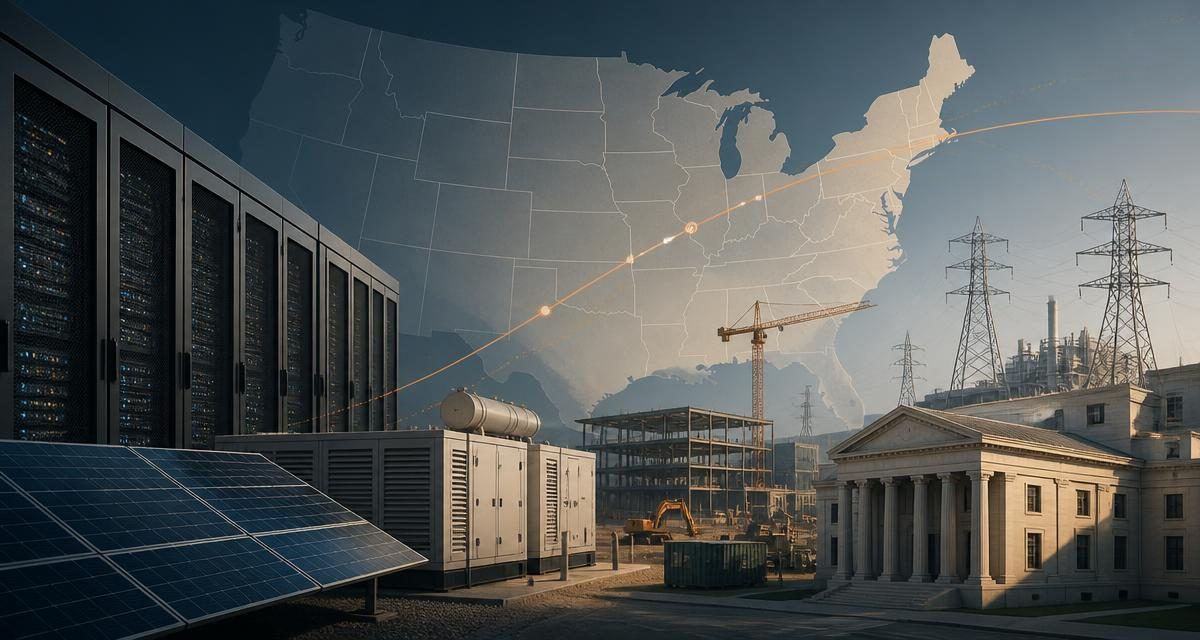
U.S. technology expansion is real but physically constrained. The August 26 power order addresses a genuine bottleneck, though implementation—not issuance—will determine its value.
The physical footprint
Workers, utilities and communities experience the AI buildout through jobs, power demand, land use, water and local tax effects.
The capacity problem
The central bottleneck is no longer only chips; it is also generation, transmission, transformers, cooling and construction labor.
How the buildout developed
Semiconductors, cloud infrastructure and model development grew before the latest order, complicating policy attribution.
Federal response
The administration is using AI deregulation, power emergency authority, trade controls and industrial policy.
Measured scale
Investment and stock-market value are visible, but energized megawatts, domestic content, permanent jobs and productivity are less complete.
Who controls execution
Utilities, chip suppliers, cloud companies, regulators and local permitting bodies determine the pace.
Strategic significance
A durable advantage requires secure supply chains and broad adoption without unacceptable cyber, safety or grid risks.
Next milestones
Watch interconnection approvals, commissioned capacity, transformer deliveries and audited company capital spending.
What changed
No new order was issued inside the ten-hour window, but fresh market reporting underscored Nvidia’s strategic and index influence.
Why it matters
Compute, chips, power, cyber resilience and skilled labor are now core economic and defense capabilities.
What to watch next
Grid implementation, interconnection approvals, company capital spending and operating compute capacity.
What we know
- The August 26 bulk-power emergency order is legally operative but too recent to have produced measured new capacity.
- AI compute investment is large and Nvidia remains a dominant market supplier.
- No authoritative national series isolates AI or data-center employment.
- Power, transformers, transmission and advanced-chip supply are binding constraints.
Material unknowns
- Energized capacity
- Permanent jobs
- Domestic content
- Productivity diffusion
U.S. strategic assessment
Critical interestThe U.S. leads in key AI capabilities, but industrial depth and power availability determine whether that lead is durable.
Objectives
- AI leadership
- Domestic compute and chip capacity
- Secure infrastructure
Strategy
- Executive action
- NIST standards
- Power expansion
- Trade and investment controls
Outcomes
- Strong private investment
- Incomplete completed-capacity and productivity metrics
Risks
- Grid stress
- Cybersecurity
- Foreign dependencies
- Capital concentration
Sources
01Controlling executive action
Technical standards and risk management
Power-system data
AI market context
Company financial and capacity disclosures